
Nigeria’s ₦1 Quadrillion Fintech Boom: Trends to Watch in 2026

Cash is losing its grip on Africa’s biggest economy. Here’s the data behind the shift and the seven forces redefining how Nigeria moves money in 2026. In 2024, Nigerians moved more than ₦1.07 quadrillion through electronic channels, an all-time high, and a number so large it barely fits on a screen. Behind that figure sits a quieter, more important story: cash is steadily losing its grip on Africa’s biggest economy, and fintech is filling the gap faster than almost anywhere on earth. Worldpay ranks Nigeria as the country with the steepest decline in cash use globally over the past decade, down roughly 59% between 2014 and 2024. For businesses, regulators and everyday users, the question is no longer whether Nigeria goes cashless, but how fast and who builds the rails. Here are the seven trends defining that race in 2026. Nigeria’s payments boom, by the numbers ₦1.07 quadrillion – total electronic payments processed in 2024, an all-time high (NIBSS)₦71.5 trillion – mobile money transactions in 2024, up 53.4% year-on-year₦284.99 trillion – e-payments in Q1 2025 alone, up 17.7% on Q1 2024+209% – jump in POS transaction value in Q1 2025 versus a year earlier60% – smartphone penetration reached in 2025, fuelling mobile-first finance Cash fell from about 91% of transactions in 2019 to 55% in 2023, and is projected to reach roughly 42% by 2027. 1. The Cashless Tipping Point Nigeria’s 2022 cash crunch was painful, but it permanently changed behaviour. Millions who once relied on notes learned to pay by transfer, USSD and wallet and never went back. Fintechs like OPay, PalmPay and Moniepoint built their dominance on speed and reliability when bank apps stumbled, and instant account-to-account transfers are now the default way Nigerians pay, from market traders to large merchants. The shift from cash isn’t a forecast anymore; it’s the baseline everything else builds on. 2. AI Gets Personal and Catches Fraudsters Artificial intelligence has moved from buzzword to backbone. Lenders use it to tailor loan offers and investment advice to individual behaviour, extending credit to people with no formal credit history. Just as importantly, AI-driven systems now scan transactions in real time to flag and freeze suspicious activity before money disappears. The payoff is twofold: tighter security and financial inclusion for the millions of people who once couldn’t score. 3. Your Face Is Becoming the New Card Contactless is giving way to device-less. Platforms are layering in biometric authentication, facial and fingerprint recognition so users can pay without fumbling for a card or even a POS terminal. For a young, mobile-first population, the friction of payment is quietly disappearing into the phone, and increasingly into the person. 4. Credit for the Underserved: Digital Lending and BNPL Digital lenders and Buy Now, Pay Later (BNPL) services are racing to meet pent-up demand for credit, using AI-driven analytics to lend to people that traditional banks have ignored. Paired with the spread of agent banking into rural and underserved communities, this is steadily closing the gap between urban and rural access to finance, one small loan and one corner-shop agent at a time. 5. New Rails: Nigeria’s National Payment Stack In November 2025, Nigeria switched on its National Payment Stack (NPS), a unified infrastructure that links banks, fintechs and mobile money operators for instant, interoperable transfers. Built under CBN supervision, it replaces the NIP system that had powered Nigerian payments since 2011, with its first live transaction settling between PalmPay and Wema Bank in milliseconds. The bigger ambition: pull an estimated 38 million unbanked adults into the formal financial system. New rails like these are unglamorous, and they’re exactly what scale a cashless economy. 6. The Homegrown Card War and the eNaira Reality Check Nigeria increasingly wants to own its payment infrastructure, not rent it. AfriGO, the CBN-backed domestic card scheme, has been signing up the country’s biggest fintech players, like OPay and Moniepoint, and banks such as Sterling and Access, offering a lower-cost, locally-controlled alternative to Mastercard and Visa. The eNaira, by contrast, is a cautionary tale. Africa’s first central bank digital currency has logged over 13 million wallets, yet fewer than 1% of Nigerians use it actively, and by late 2025, the CBN signalled a pivot toward a wholesale, bank-to-bank model rather than chasing everyday adoption. The lesson for 2026: infrastructure only wins when it solves a problem users actually feel. 7. Money Starts Crossing Borders – Cheaply This is where 2025 delivered the biggest leap. The PAPSS African Currency Marketplace, launched mid-2025, now lets a transaction begin in one African currency and end in another without converting through the US dollar, connecting 16 central banks, 150-plus commercial banks and 14 national switches in real time. Alongside it, PAPSSCARD debuted as Africa’s first pan-African card scheme, keeping value and data on the continent. It matters because Sub-Saharan Africa is still the world’s most expensive place to send money, with fees averaging well above the 3% global target. Cheaper, sovereign cross-border rails plus the rise of regulated naira stablecoins like cNGN could finally bring those costs down and unlock trade corridors that barely functioned before. The future of African payments isn’t one winner, it’s a hybrid of instant bank rails, domestic cards and digital currency, built and owned on the continent. What It Means for Businesses in 2026 For Nigerian businesses, this isn’t a spectator sport. The organisations that win the next phase will be the ones that: Nigeria is no longer catching up to the global payments curve in cashless adoption and home-grown infrastructure; it’s helping to draw it. The boom is real, the rails are being laid, and 2026 is the year to build on them. Build for Nigeria’s cashless future From secure payment platforms and AI-driven fraud monitoring to cloud infrastructure and software development, Cloud Technology Hub helps Nigerian businesses build for the digital-payments era. Read More Here
Warning: The Online Threats Hiding in Your Child’s Phone

The smartphone in your child’s pocket is a classroom, a playground and a doorway strangers can walk through. Here’s how to keep it safe. For millions of Nigerian children, a smartphone is now as ordinary as a pen and notebook. They learn from it, chat on it, and grow up on it. With a national median age of just 18.4 years, our classrooms are full of digital natives who practically live on WhatsApp, TikTok and Instagram for schoolwork, friendship and fun. But every pocket-sized screen is also a doorway, and not everyone knocking is friendly. Scammers, cyberbullies, online predators and a flood of misinformation are all one tap away. Without awareness and guidance, even innocent phone use can put a child at risk. The Nigerian Communications Commission has said as much, launching a nationwide Cybersecurity Enlightenment campaign for schools and pledging to shield children and youth from every form of cyber attack. As one NCC leader put it, the internet has become “an indispensable element of everyday life”, and our children are not excluded. The message from regulators, NGOs and tech leaders is the same: teach students, parents and teachers to browse safely, or risk Nigeria’s future. This guide shows you how. The Real Threats Hiding in Plain Sight Cyberbullying and online harassment Online gossip spreads in minutes, and trolls in WhatsApp groups or TikTok comments can turn classmates into targets. Digital-safety trainers teach a simple response: don’t feed the troll. Block them, screenshot the evidence, and tell a trusted adult. Students are encouraged to be upstanders, not bystanders, to speak up for victims rather than watch in silence. Phishing and scams Phishing isn’t just dodgy emails. It also arrives as fake SMS (“smishing”), and even voice calls (“vishing”), impersonating banks, schools or “free data” giveaways. The golden rule trainers drill into students: never share your NIN, BVN or bank details online, and treat every unsolicited link or prize offer with deep suspicion. Weak passwords make it worse. Security researchers note that “123456” remains one of Nigeria’s most common passwords, a gift to identity thieves. Long passphrases with symbols, and never reusing PINs, slash the risk almost instantly. Online predators and grooming This is the gravest danger, because predators hide behind friendly profiles. Low digital literacy and limited supervision leave young people exposed. In one Lagos classroom, a student shared that a stranger had pressured her for explicit photos. She did exactly the right thing, telling her mother and blocking the contact immediately. The lesson for every home and school: children must feel completely safe reporting any creepy or coercive encounter, with zero fear of blame. Digital footprints and privacy Every photo and post can follow a child into adulthood. Facilitators urge teens to think before they share, to avoid sharing exact locations, not to show off valuables, and to leave a trail they’ll be proud of later. A handy filter is the THINK rule: before posting, ask if it’s True, Helpful, Inspiring, Necessary and Kind. Screen-time overload It’s easy to lose hours to games and feeds. One Ibadan survey found that nearly half of students, about 45%, showed signs of problematic internet use, which can harm sleep, grades and mental health. Tech-free hours, outdoor breaks and honest parent–teacher conversations keep screen time from spiralling. 6 Habits That Keep Students Safe Online Most online risk shrinks dramatically when families and schools build a few simple habits. The Nigerians Leading the Charge This isn’t a lone effort. Cybersafe Foundation’s “Cybersmart Child” program uses games and storytelling to teach young children to spot and avoid cyber risks. CyberWise Foundation runs free workshops in Lagos secondary schools, including a 2025 session at Dr Soyemi Memorial School on phishing, bullying and digital footprints, bringing security experts straight into the classroom. Industry is in it, too. Security firm Mitiget has run a youth-focused Cybersecurity Awareness Month, holding summits at schools like Victory Grammar and Methodist Girls’ High, where principals praised the timing of teaching staff and students best practices. Government agencies are also active: the NCC’s Child Online Protection arm has worked with schools since 2020 on security clubs, awareness policies and an incident-response capability for the education sector. “Empowering our youth with cybersecurity knowledge is crucial to Nigeria’s digital future.” Olalekan Ilori, Cyber Culture Interface The common thread across all of them is empowerment through education, turning students into cybersecurity ambassadors rather than easy targets. How to Take Action Today Awareness only matters when it becomes action. You can start this week: Practice strong passwords, verify before you click, and always THINK before you post. Together, educators, parents and young people, we can build a cyber-aware Nigeria where every child can study, socialise and grow online safely. The time to act is now. Read More Here
Smart Nigeria: How AI and IoT Are Transforming Farming, Power, Health and Security
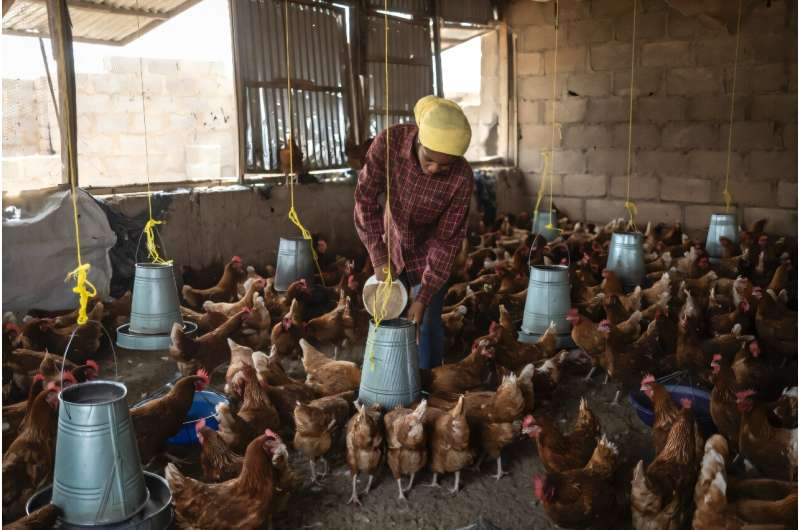
Connected sensors used to just collect data. Now, paired with autonomous AI agents, they make decisions, and they are quietly rebuilding four of Nigeria’s most critical sectors. A farmer in Jos glances at his phone and learns the exact hour to water his peppers. A village in the Niger Delta receives blood by drone in minutes, not the days it once took. A command centre in Abuja watches a stretch of forest that no patrol has ever reached. None of this is science fiction. It is happening in Nigeria, right now. What links these moments is a quiet but powerful shift: the marriage of Internet-of-Things (IoT) sensors with autonomous AI agent software that doesn’t just gather data, but acts on it. Call it AIoT, and it is fast becoming the country’s most underrated growth story. From heartland farms to megacity grids, from remote clinics to national security, Nigerian innovators are wiring up sensors and handing the readings to machines that can think. The result is a leapfrog moment, and here is what it looks like across the four sectors where it matters most. 1. Agriculture: From Soil Sensors to AI Agronomists Agriculture employs most Nigerians and accounts for roughly 24% of GDP, yet yields stay stubbornly low, and the climate keeps moving the goalposts. Smart farming is changing that equation one plot at a time. What’s happening today In Plateau State, greenhouse farmers are deploying solar-powered soil probes from local agri-tech GreenEden. The devices track moisture, temperature and pH, stream the data to a mobile app, and let an AI backend tell the farmer precisely when to irrigate or fertilise. One grower reported his pepper harvest jumped by about 400kg, roughly a 20% lift, after the probes went in. Another Jos venture, Anatsor, brought the same idea to poultry. Sensors monitor temperature, humidity and air quality inside the coop; the moment conditions drift out of safe range, the farmer gets a push alert. P oultry keeper Mercy Atsuku says the system has all but ended sudden flock losses and spared her the nightly checks. The setup costs about $150 (around three times the local monthly wage), but the gains in egg production and reclaimed time more than paid it back. Going further up the stack, precision-ag startup Zenvus pairs networked soil sensors with multispectral cameras and a cloud AI engine that advises on fertiliser and irrigation. According to UNEP, its users have seen yield uplifts of up to 50%. “With probes in the soil and AI on the phone, my production increased by about 400 kilograms,” a Jos pepper farmer Where it’s heading Expect farms to get genuinely agentic. Picture autonomous drones mapping fields for pest outbreaks and coordinating with ground sensors, AI “digital agronomists” adjusting inputs in real time, and SMS pest-alert services that reach farmers without smartphones. Backed by the National Digital Agriculture Strategy and NITDA’s planned innovation sandboxes, the endgame is democratised AI farming where even a remote plot in Kano gets a connected soil monitor, an AI assistant, and national food security strengthens with it. 2. Energy: Smarter Grids, Self-Healing Microgrids With only about 60% grid access nationwide, power has long throttled Nigerian growth. IoT and AI are starting to loosen the grip. What’s happening today Where it’s heading The horizon is a self-managing grid: AI “grid optimisers” orchestrating rooftop solar, mini-hydro and storage minute by minute; smart thermostats and EV chargers responding to AI-generated price signals; even dust-cleaning robots servicing solar arrays in remote towns. For Nigerians, that means 24/7 reliability for clinics and businesses, less diesel dependence, and lower subsidy pressure. The catch: rural connectivity and grid cybersecurity still need serious investment. Poultry farmer Mercy Atsuku at her Jos coop, with IoT environmental sensors from Anatsor. The AI-equipped system monitors temperature, humidity and water quality, sending alerts that “reduced a lot of stress” in raising chickens. 3. Health: Connected Care That Reaches the Last Mile Doctor shortages and rural distance make Nigerian healthcare a natural fit for IoT and AI, and the gaps are starting to close. What’s happening today In 2023, satellite agency NIGCOMSAT launched NigComHealth, the country’s first national telemedicine platform, letting any Nigerian book a qualified doctor by video or phone over satellite links, with AI-assisted scheduling matching patients to the right specialist. Health-tech leader Helium Health is digitising clinics with electronic records and telehealth, syncing data from glucose monitors and heart-rate wearables and flagging clinicians when readings cross a threshold. Insurers are piloting IoT wearables for dynamic pricing, and chronic-disease patients increasingly carry connected glucometers that auto-upload readings, letting AI spot a worrying trend and prompt an appointment early. Then there’s the game-changer: drone logistics. From its Yenagoa hub in Bayelsa, Zipline flies vaccines, blood and lab samples to off-grid clinics across the Niger Delta, turning a journey that once took days into a same-hour delivery, with GPS and temperature monitors keeping the payload safe en route. A doctor in Port Harcourt can now order blood and have it arrive by drone in minutes, a task that once took days. Where it’s heading Imagine every patient with a personal AI health agent: wearables tracking vital signs around the clock, alerting emergency services to a heart-attack pattern, or nudging a diabetic patient based on live blood-sugar data. On the public-health level, AI could blend water sensors, clinic logs and weather data to predict cholera or malaria outbreaks before they spread. The prize is lower-cost care and a booming health-tech job market, provided broadband expands, and medical-grade data security keeps pace. 4. Security: AI Agents and IoT on the Frontline From urban crime to insurgency, Nigeria’s security challenges are spawning some of its boldest AIoT experiments. What’s happening today In 2024, the Nigerian Police Force announced a nationwide drone surveillance system, streaming high-resolution camera and sensor data from UAVs to a central command centre in Abuja. The promise, in the Inspector-General’s words, is that “ungoverned spaces”, forests and deserts once invisible to patrols, can finally be watched continuously. Beyond drones, analysts
Securely Setting Up a Kubernetes Cluster

Kubernetes can accelerate application delivery, but misconfigurations lead to serious security risks. Follow these best practices to build a hardened cluster from the ground up. 1. Choose a Secure Deployment Method You have three main options: DIY Recommendation: Start with kubeadm on hardened VMs to learn core components. 2. Secure the Host OS Before installing Kubernetes, lock down your nodes: Enable Automatic Security Updates: # Ubuntu: unattended-upgrades sudo apt-get install unattended-upgrades sudo dpkg-reconfigure –priority=low unattended-upgrades Kernel Hardening: cat <<EOF | sudo tee /etc/sysctl.d/99-k8s.conf net.ipv4.ip_forward = 1 net.bridge.bridge-nf-call-iptables = 1 fs.protected_regular = 1 fs.protected_fifos = 1 EOF sudo sysctl –system 3. Initialise the Control Plane with kubeadm Install kubeadm, kubelet, kubectl on all nodes citeturn0search1: sudo apt-get update && sudo apt-get install -y \ apt-transport-https ca-certificates curl curl -fsSL https://packages.cloud.google.com/apt/doc/apt-key.gpg | sudo apt-key add – echo “deb https://apt.kubernetes.io/ kubernetes-xenial main” | sudo tee /etc/apt/sources.list.d/kubernetes.list sudo apt-get update sudo apt-get install -y kubelet kubeadm kubectl sudo apt-mark hold kubelet kubeadm kubectl Generate a strong token and certificate key for cluster join: kubeadm init –pod-network-cidr=10.244.0.0/16 \ –token-ttl=24h \ –upload-certs Secure the kube‑config file: mkdir -p $HOME/.kube sudo cp -i /etc/kubernetes/admin.conf $HOME/.kube/config sudo chown $(id -u):$(id -g) $HOME/.kube/config chmod 600 $HOME/.kube/config 4. Harden the Control Plane Enable Audit Logging: # /etc/kubernetes/audit-policy.yaml apiVersion: audit.k8s.io/v1 kind: Policy rules: – level: Metadata resources: – group: “” resources: [“pods”,”secrets”,”configmaps”] # kube-apiserver manifest (/etc/kubernetes/manifests/kube-apiserver.yaml) – –audit-policy-file=/etc/kubernetes/audit-policy.yaml – –audit-log-path=/var/log/kubernetes/audit.log – –audit-log-maxage=30 Enable Encryption at Rest for Secrets: # /etc/kubernetes/encryption-config.yaml apiVersion: apiserver.config.k8s.io/v1 kind: EncryptionConfiguration resources: – resources: – secrets providers: – aescbc: keys: – name: key1 secret: <base64-encoded-32-byte-key> – identity: {} 5. Deploy a Network Plugin with Policy Enforcement Install a CNI that supports NetworkPolicies, e.g., Calico: kubectl apply -f https://docs.projectcalico.org/manifests/calico.yaml Then enforce a default‑deny policy: apiVersion: networking.k8s.io/v1 kind: NetworkPolicy metadata: name: default-deny namespace: default spec: podSelector: {} policyTypes: – Ingress – Egress 6. Configure RBAC and Pod Security Standards a. RBAC apiVersion: rbac.authorization.k8s.io/v1 kind: Role metadata: namespace: production name: pod-reader rules: – apiGroups: [“”] resources: [“pods”] verbs: [“get”,”watch”,”list”] — apiVersion: rbac.authorization.k8s.io/v1 kind: RoleBinding metadata: name: read-pods namespace: production subjects: – kind: User name: alice apiGroup: rbac.authorization.k8s.io roleRef: kind: Role name: pod-reader apiGroup: rbac.authorization.k8s.io b. Pod Security Admission Use built‑in PodSecurity admission (Kubernetes v1.25+): kubectl label namespace production pod-security.kubernetes.io/enforce=restricted 7. Secure Container Images & Supply Chain Enforce Image Signing with Sigstore/Cosign: cosign sign –key cosign.key myregistry/myapp:latest 8. Deploy Monitoring & Intrusion Detection Falco for runtime intrusion detection: helm repo add falcosecurity https://falcosecurity.github.io/charts helm install falco falcosecurity/falco 9. Enable Logging & Audit Collection 10. Regular Maintenance & Updates Further Reading Read More Here
When ChatGPT Went Down: A Wake-Up Call for the AI-Dependent World

On the morning of June 10, 2025, something extraordinary happened not in what was said, but in what wasn’t. Millions of users worldwide opened ChatGPT expecting quick answers, thoughtful ideas, or even a bit of digital companionship. Instead, they were met with blank screens, error messages, and a blinking cursor that went nowhere. For over eight hours, OpenAI’s flagship AI sputtered, crashed, and stalled, leaving more than 500 million people worldwide without their digital co-pilot. This wasn’t just a tech hiccup. It was a rare moment of global cognitive disconnection and a striking reminder of how deeply we’ve woven artificial intelligence into our daily routines. Life on Pause: The Human Cost of Silence Productivity in Freefall From university students to software engineers to content creators, workflows crumbled. In India alone, 88% of 800+ user complaints cited total unresponsiveness. One user summed it up perfectly: “It felt like losing a collaborator.” Emotional Fallout Social media has become a sort of therapy couch. Memes of users solemnly staring at loading screens went viral. Behind the humour was real frustration and a strange emptiness. Many had come to rely on ChatGPT not just for work, but as a sounding board, a creative partner, even a virtual friend. Business DisruptionIt wasn’t just individuals who suffered. Companies that embedded OpenAI’s API into operations from customer service to analytics hit immediate roadblocks. Paid users, Plus subscribers, and Enterprise clients were all affected equally. A reminder that in today’s economy, an AI outage is more than an inconvenience; it’s a liability. What Broke? A Deep Dive Into the Technical Collapse OpenAI’s status dashboard was grim. 21 ChatGPT components, 14 API endpoints, and 4 Sora video-generation modules buckled in tandem. This was no isolated bug; it was a system-wide failure. Even Sora, OpenAI’s experimental video tool, faltered, signalling infrastructure stress far deeper than front-end traffic overload. Why This Outage Hit Harder Than Ever This wasn’t the first ChatGPT glitch of 2025, but it was the most visceral. Unprecedented ReachOver 1,350 user reports flooded Downdetector within hours, surpassing April’s infamous Ghibli-image crash. With ChatGPT now reaching 400 million weekly users, the global dependency is undeniable. OpenAI’s Silence Beyond vague “investigations,” OpenAI offered no real-time transparency. No timeline. No explanation. The vacuum only invited rumours: Was it a cyberattack? A capacity breakdown? An AI gone rogue? Competitors Seize the Moment Grok claimed “superior uptime.” DeepSeek’s traffic soared by 300%. Merlin, a multi-LLM platform, saw record installs. The outage became a litmus test for the resilience and opportunity of the broader AI ecosystem. The Bigger Picture: A Fragile Digital Nervous System What June 10 ultimately revealed was not just a failure of code, but a failure of design thinking. We’ve created a society where our cognitive processes, research, ideation, writing, and even emotional support are increasingly outsourced to machines. And yet: Where Do We Go From Here? Rethinking Resilience in AI The June 10 incident should be a wake-up call, not a one-off joke. Should AI be treated like critical infrastructure, power, water, and the internet?Uptime guarantees and regulatory frameworks may be the next frontier. Time to embrace decentralisation? Federated AI models combining local tools with cloud backups could reduce single points of failure. Develop user-level resilience: “We’ve outsourced cognition to algorithms. On June 10, it felt like a global brain freeze.” Final Thoughts: We Saw Ourselves in the Silence What made this outage unforgettable wasn’t just the silence but our reaction to it. Some panicked. Some adapted. Some found humour. Others discovered new tools. But all of us saw, even if briefly, how tightly we’ve entangled ourselves with machines. ChatGPT didn’t just go dark; it pulled back a curtain. We saw how quickly human ingenuity turns to dependency. And we saw that when AI fails, it’s not just machines that go offline. It’s a part of us. As we continue the march toward AGI, the question isn’t just “What can AI do?” but also “What happens when it can’t?” How did June 10 affect you? Did you switch tools, or just wait it out? Drop your thoughts in the comments. Read More Here
How to Create an Admin Account on a Mac Without an Existing Admin

Losing admin access to your Mac can be frustrating, especially if you need to make system changes or install software. Fortunately, macOS provides built-in recovery tools that allow you to regain admin privileges even without an existing admin account. In this guide, we’ll explore three effective methods to create a new admin account. Method 1: Using Recovery Mode Recovery Mode is a built-in feature that allows users to perform system repairs, reinstall the system, reset passwords, and create a new admin account. Step-by-Step Guide resetpassword Fun Fact: The first Macintosh computer, the Macintosh 128K, was introduced on January 24, 1984, and was the first mass-market personal computer to feature a graphical user interface and a mouse Method 2: Using Single-User Mode Single-User Mode is a command-line interface that allows advanced users to modify system settings, including creating a new admin account. Step-by-Step Guide /sbin/mount -uw / rm /var/db/.AppleSetupDone reboot Method 3: Using a Bootable USB Installer If the above methods fail, you can use a bootable macOS installer to create a new admin account. Step-by-Step Guide sudo /Applications/Install\ macOS\ [version].app/Contents/Resources/createinstallmedia –volume /Volumes/MyVolume Conclusion Regaining admin access without an existing administrator is possible using Recovery Mode, Single-User Mode, or a bootable USB installer. These methods help you reset passwords, bypass setup files, or create a new admin account from scratch. Important: Only use these methods on a Mac you legally own or have permission to access. Misusing these techniques on someone else’s computer without authorisation may violate privacy laws. By following these steps, you can regain control of your laptop and continue using it without restrictions. Read More Here