Connected sensors used to just collect data. Now, paired with autonomous AI agents, they make decisions, and they are quietly rebuilding four of Nigeria’s most critical sectors.
A farmer in Jos glances at his phone and learns the exact hour to water his peppers. A village in the Niger Delta receives blood by drone in minutes, not the days it once took. A command centre in Abuja watches a stretch of forest that no patrol has ever reached. None of this is science fiction. It is happening in Nigeria, right now.
What links these moments is a quiet but powerful shift: the marriage of Internet-of-Things (IoT) sensors with autonomous AI agent software that doesn’t just gather data, but acts on it. Call it AIoT, and it is fast becoming the country’s most underrated growth story.
From heartland farms to megacity grids, from remote clinics to national security, Nigerian innovators are wiring up sensors and handing the readings to machines that can think. The result is a leapfrog moment, and here is what it looks like across the four sectors where it matters most.
1. Agriculture: From Soil Sensors to AI Agronomists
Agriculture employs most Nigerians and accounts for roughly 24% of GDP, yet yields stay stubbornly low, and the climate keeps moving the goalposts. Smart farming is changing that equation one plot at a time.
What’s happening today
In Plateau State, greenhouse farmers are deploying solar-powered soil probes from local agri-tech GreenEden. The devices track moisture, temperature and pH, stream the data to a mobile app, and let an AI backend tell the farmer precisely when to irrigate or fertilise. One grower reported his pepper harvest jumped by about 400kg, roughly a 20% lift, after the probes went in.
Another Jos venture, Anatsor, brought the same idea to poultry. Sensors monitor temperature, humidity and air quality inside the coop; the moment conditions drift out of safe range, the farmer gets a push alert. P
oultry keeper Mercy Atsuku says the system has all but ended sudden flock losses and spared her the nightly checks. The setup costs about $150 (around three times the local monthly wage), but the gains in egg production and reclaimed time more than paid it back.
Going further up the stack, precision-ag startup Zenvus pairs networked soil sensors with multispectral cameras and a cloud AI engine that advises on fertiliser and irrigation. According to UNEP, its users have seen yield uplifts of up to 50%.
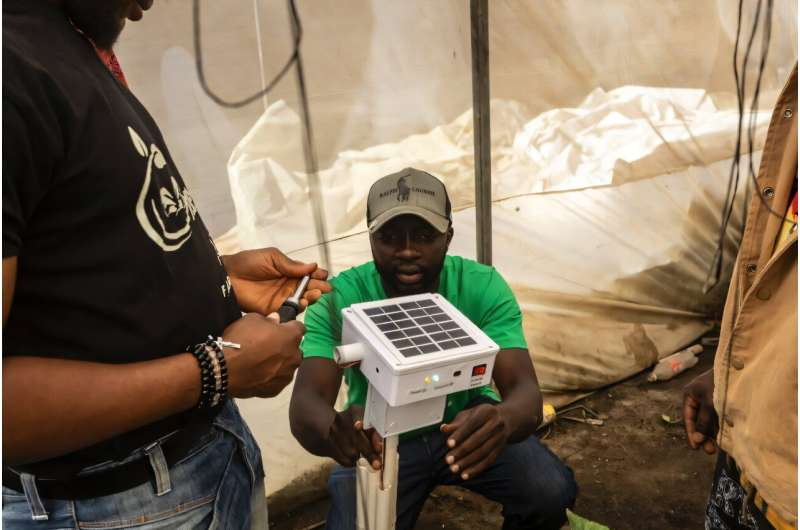
“With probes in the soil and AI on the phone, my production increased by about 400 kilograms,” a Jos pepper farmer
Where it’s heading
Expect farms to get genuinely agentic. Picture autonomous drones mapping fields for pest outbreaks and coordinating with ground sensors, AI “digital agronomists” adjusting inputs in real time, and SMS pest-alert services that reach farmers without smartphones. Backed by the National Digital Agriculture Strategy and NITDA’s planned innovation sandboxes, the endgame is democratised AI farming where even a remote plot in Kano gets a connected soil monitor, an AI assistant, and national food security strengthens with it.
2. Energy: Smarter Grids, Self-Healing Microgrids
With only about 60% grid access nationwide, power has long throttled Nigerian growth. IoT and AI are starting to loosen the grip.
What’s happening today
- Smart meters at scale. Locally built IoT meters let households monitor consumption in real time, regulate loads and cut bills while choking off energy theft. On the policy side, regulator NERC approved ₦21 billion (US$60M+) to roll out 1.5 million free smart meters, explicitly to power data analytics that reduce commercial losses.
- AI-run microgrids. Husk Power Systems, which operates solar mini-grids across Nigeria, now runs its network on an AI platform and raised a $103M fund to expand 500 new mini-grids. Its app handles usage and mobile payments while the controller balances load and storage automatically, bringing reliable power to enterprises that the national grid never reached.
- Smart home & clinic systems. Players like Greenage Technologies bundle IoT-enabled inverters with cloud dashboards so owners can monitor and optimise energy remotely, while MTN’s IoT Connect platform underpins smart metering at the network level.
Where it’s heading
The horizon is a self-managing grid: AI “grid optimisers” orchestrating rooftop solar, mini-hydro and storage minute by minute; smart thermostats and EV chargers responding to AI-generated price signals; even dust-cleaning robots servicing solar arrays in remote towns. For Nigerians, that means 24/7 reliability for clinics and businesses, less diesel dependence, and lower subsidy pressure. The catch: rural connectivity and grid cybersecurity still need serious investment.
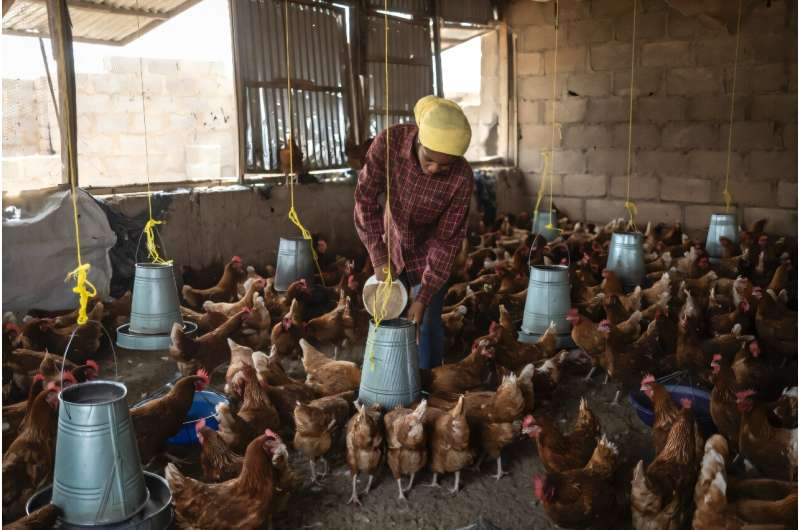
Poultry farmer Mercy Atsuku at her Jos coop, with IoT environmental sensors from Anatsor. The AI-equipped system monitors temperature, humidity and water quality, sending alerts that “reduced a lot of stress” in raising chickens.
3. Health: Connected Care That Reaches the Last Mile
Doctor shortages and rural distance make Nigerian healthcare a natural fit for IoT and AI, and the gaps are starting to close.
What’s happening today
In 2023, satellite agency NIGCOMSAT launched NigComHealth, the country’s first national telemedicine platform, letting any Nigerian book a qualified doctor by video or phone over satellite links, with AI-assisted scheduling matching patients to the right specialist.
Health-tech leader Helium Health is digitising clinics with electronic records and telehealth, syncing data from glucose monitors and heart-rate wearables and flagging clinicians when readings cross a threshold. Insurers are piloting IoT wearables for dynamic pricing, and chronic-disease patients increasingly carry connected glucometers that auto-upload readings, letting AI spot a worrying trend and prompt an appointment early.
Then there’s the game-changer: drone logistics. From its Yenagoa hub in Bayelsa, Zipline flies vaccines, blood and lab samples to off-grid clinics across the Niger Delta, turning a journey that once took days into a same-hour delivery, with GPS and temperature monitors keeping the payload safe en route.
A doctor in Port Harcourt can now order blood and have it arrive by drone in minutes, a task that once took days.
Where it’s heading
Imagine every patient with a personal AI health agent: wearables tracking vital signs around the clock, alerting emergency services to a heart-attack pattern, or nudging a diabetic patient based on live blood-sugar data. On the public-health level, AI could blend water sensors, clinic logs and weather data to predict cholera or malaria outbreaks before they spread. The prize is lower-cost care and a booming health-tech job market, provided broadband expands, and medical-grade data security keeps pace.
4. Security: AI Agents and IoT on the Frontline
From urban crime to insurgency, Nigeria’s security challenges are spawning some of its boldest AIoT experiments.
What’s happening today
In 2024, the Nigerian Police Force announced a nationwide drone surveillance system, streaming high-resolution camera and sensor data from UAVs to a central command centre in Abuja. The promise, in the Inspector-General’s words, is that “ungoverned spaces”, forests and deserts once invisible to patrols, can finally be watched continuously.
Beyond drones, analysts are exploring AI agents that scan social media in local dialects for early signs of unrest, map crime hotspots by blending CCTV, licence-plate and emergency-call data, and empower homegrown players like CcHub and Data Science Nigeria to build local security tools rather than importing them.
Where it’s heading
Picture sensor networks, motion detectors, acoustic gunshot locators, livestock trackers wired to AI agents that recognise the sound of gunfire and dispatch a drone automatically, or flag a cattle-rustling pattern before a raid. Safer cities and highways mean more business confidence and less pressure on citizens to take “jungle justice” into their own hands. But the caveats are real: facial recognition and surveillance demand clear policy, oversight and data-protection guardrails before they scale.
Why It Matters: Service, Empowerment, Resilience
Strip away the hardware, and three societal shifts come into focus.
- Better service delivery. Telemedicine and drones bring doctors and medicine to rural patients; smart meters and microgrids deliver fairer, steadier power; AI extension apps coach farmers in real time; and faster security response protects communities. Citizens get services that are quicker, cheaper and more personal.
- Economic empowerment. The 20–50% yield gains flow straight into farmers’ pockets. Microgrids unlock cold storage, welding and charging kiosks in off-grid towns. Startups like GreenEden, Anatsor and Helium Health are creating jobs and pulling in investment, while skills programmes such as NITDA’s 3MTT train a new generation of AI and IoT engineers.
- Resilience to shocks. Precision farming buffers against drought and pests; AI-managed renewables keep power on through fuel-price spikes; proactive monitoring steadies security. Crucially, edge devices keep working, collecting and analysing locally even when connectivity drops, making communities more self-reliant in a crisis.
The thread running through all of it is inclusion. The payoff multiplies only if these tools reach across regions and income levels, which means expanding rural broadband and electrification, and backing public-private partnerships that spread the benefit beyond a wealthy few.
The Bottom Line
Nigeria’s leap into an AIoT-powered future is already underway: sensor networks lifting farm output, smart grids steadying power, telehealth extending care, and drones patrolling places no officer could reach. As these systems mature, the country could build some of Africa’s most advanced smart-farming, clean-energy, e-health and security infrastructure.
The challenges of infrastructure gaps, data policy, and ethics are real. But so is the momentum. When IoT devices meet autonomous AI agents in Nigeria, they stop merely collecting data and start acting on it. That is the essence of Digital Nigeria 2.0: connected devices and intelligent software working hand in hand to unlock productivity and resilience for the people who need it most.
Building the connected, intelligent future.
At Cloud Technology Hub, we help Nigerian organisations turn IoT, AI and automation into real outcomes from infrastructure to deployment. Ready to put intelligence to work?
Talk to our team info@technohub.cloud
Read More Here