
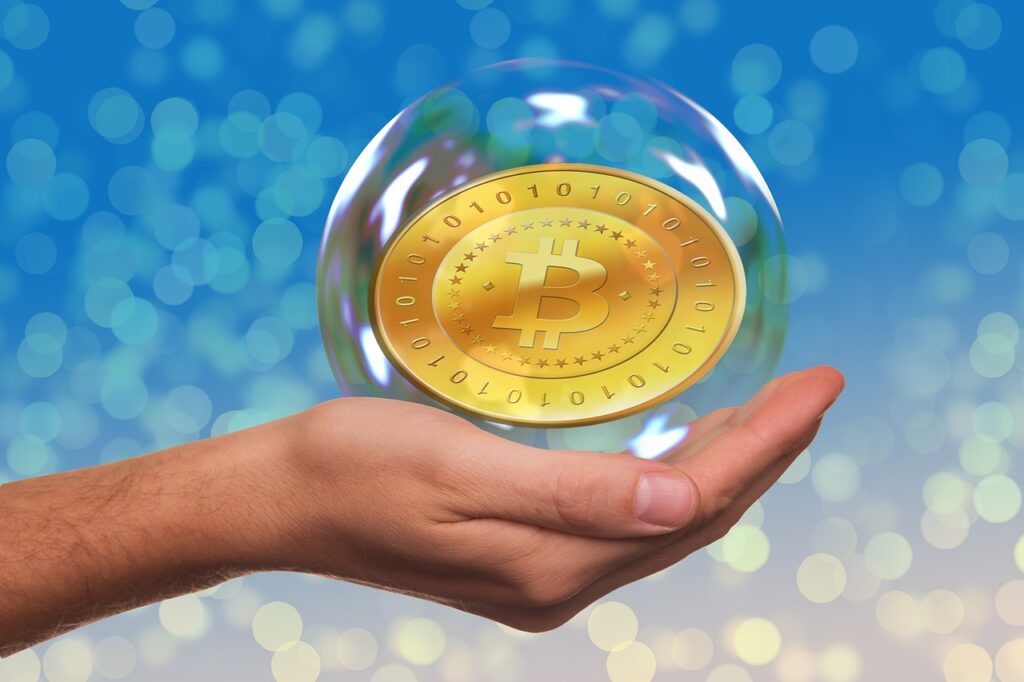
Every generation of investors swears it has learned from the last investment bubble. They study the crashes, read the post-mortems, and nod solemnly at the wreckage. Then, quietly, they walk straight into the next one.
This is not a story about stupidity. It never was. The people who funded Pets.com were not fools. The ones who piled into subprime mortgage-backed securities were not unsophisticated. The founders raising $2 billion seed rounds for companies that refuse to say what they’re building are not being reckless. At least, not in the way we like to imagine. They are, in almost every case, intelligent people making locally rational decisions inside a system that has quietly gone mad around them.
That is what makes investment bubbles so dangerous. And so endlessly recurring.

The Grain of Truth
Start here, because this is where almost everyone starts: with something real.
The railroads genuinely transformed America. The internet genuinely changed everything. Radio really did revolutionise how human beings communicate and consume culture. And artificial intelligence, whatever shape it eventually takes, will almost certainly reorder significant parts of how the world works.
Bubbles are not built on lies. They are built on truths, stretched past the point where they can bear the weight placed upon them.
This is the founding paradox: the technology being right and the investment being right are two entirely different propositions. Warren Buffett noted decades ago that the automobile was arguably the most important invention of the first half of the twentieth century. And yet of the two thousand car companies that once existed in America, only three survived. The car won. Nearly every company that made it lost.
Founders, more than anyone, need to sit with this distinction. The conviction that your market is real, your technology is transformative, your timing is right: none of that is a guarantee that your company survives the cycle. History is littered with companies that were correct about the future and still did not make it there.
What Actually Drives an Investment Bubble
When we talk about investment bubbles, we reach for the language of greed. The greedy investor, the reckless speculator, the market gone mad. It is a satisfying story, but it is mostly wrong.
The dominant force inside a bubble is not greed. It is something more uncomfortable: the fear of being left behind.
Howard Marks, who wrote with striking clarity about the dot-com mania as it was unfolding in January 2000, put it plainly: the strongest motivator in a speculative market is not the desire to win, but the terror of watching everyone else win without you. Charles Kindleberger captured the same thing with even more precision: “There is nothing so disturbing to one’s well-being and judgment as to see a friend get rich.”
This is not irrational. It is profoundly human. When your peer raises at a $500 million valuation for a company younger than your last relationship, you are not looking at a data point. You are looking at a mirror. And the mirror is asking whether you are moving fast enough, thinking big enough, whether you have what it takes. The pressure is not external. It lives inside you.
This is why bubbles accelerate. Every funding round that closes at a surreal number becomes evidence that the market is real, that the opportunity is now, that hesitation is the only true risk. Caution starts to look like cowardice. Discipline looks like a failure of imagination. The ones who hold back are not prudent. They are the ones who simply don’t get it.
The Newness Problem
There is a specific mechanism that makes all of this possible, and it is surprisingly simple: when something is genuinely new, there is no historical reference point to restrain the imagination.
In normal markets, history functions as a tether. If a sector is trading at valuations well beyond any precedent, analysts can point to what those valuations looked like the last time, and what happened after. But when the thing is new, truly new, that tether doesn’t exist. The future appears, in every direction, as pure possibility.
John Kenneth Galbraith wrote about what he called “the extreme brevity of the financial memory.” How quickly market participants dismiss past experience as the refuge of people who lack the vision to appreciate the present moment. In a bubble, historical caution is reframed as ignorance. The person raising flags is not wise. They are simply behind.
For founders operating inside a hot sector, this creates a particular kind of pressure. When your entire competitive landscape is fundraising aggressively, burning at scale, and hiring in a frenzy, slowing down does not feel like prudence. It feels like falling behind. The rational response, inside the logic of the bubble, is to match the pace. And so the cycle feeds itself.
The Crowd as Camouflage
There is another psychological force at work, subtler but just as powerful: the crowd makes it nearly impossible to hold a dissenting view.
Hans Christian Andersen understood this before the concept of market psychology existed. In The Emperor’s New Clothes, the citizens are not foolish. They can see perfectly well that the emperor is naked. But the social cost of saying so, of being the person who fails to see what everyone else claims to see, is too high. And so the delusion holds, enforced not by any conspiracy but by ordinary social pressure, repeated across thousands of individual decisions.
Marks observed this same dynamic playing out in real time. In 2000, he watched colleagues who knew the market was stretched stay invested anyway, arguing they would exit before the momentum broke. In 2006, he saw lenders who privately understood the risk continue originating loans because everyone else was doing the same thing.
By the time a bubble is visible enough to name, the crowd providing cover is enormous. The VC who passes on the round risks looking foolish if the company becomes a generational winner. The founder who raises conservatively risks watching competitors outbuild them with capital they never took. The engineer who skips the equity risk looks naïve when former colleagues are suddenly wealthy. Each individual decision is defensible. The aggregate is madness.
Two Kinds of Investment Bubbles and Why It Matters
Not all bubbles are equal, and the distinction matters enormously for anyone building inside one.
Some bubbles the subprime crisis, the South Sea Company, various financial engineering schemes over the centuries are built on financial constructs with no real foundation beneath them. When they collapse, the wreckage is total. There is no infrastructure left standing, no lasting value created, nothing but the memory of losses.
But the bubbles built around genuine technological leaps work differently. The dot-com crash wiped out trillions in market value and destroyed thousands of companies. It also laid the fibre-optic cables, the server infrastructure, and the internet architecture that made Amazon, Google, and everything that followed possible. The losses were real. So was what remained.
Economists Byrne Hobart and Tobias Huber call these inflection bubbles: manias where the speculative excess actually accelerates the development of something that would have taken decades to build otherwise. The investors who lose their money are, in a brutal sense, subsidising the future. The infrastructure gets built. The technology matures. The next generation inherits the foundation.
For founders, this distinction cuts both ways. If you are building inside a genuine technological inflection, the bubble may ultimately serve the technology even as it destroys companies. Your failure, if it comes, might still contribute something real. But that is cold comfort when the water rises. Being on the right side of history does not mean you survive the correction. The technology wins. You might not.
How an Investment Bubble Escalates: Stage by Stage
Bubbles do not arrive fully formed. They move in recognisable stages, and by the time most people can name what is happening, the logic of the thing has long since taken hold.
It begins with a real breakthrough: something that captures imagination precisely because it is not incremental. Early participants move in, make extraordinary returns, and become legends almost overnight. The people watching feel something specific: not just envy, but a particular kind of regret. The regret of having seen the opportunity and not taken it.
Stage three is where the psychology shifts decisively. The observers, now motivated by the fear of continued exclusion, begin to participate. They do so not through careful analysis but through capitulation. The price they pay stops mattering, because the framework for assessing price has dissolved. Valuation metrics that would once have raised flags are quietly retired and replaced with new ones more suited to the moment.
What follows is what Marks calls lottery ticket thinking: a form of reasoning that is mathematically coherent but psychologically catastrophic at scale. If a startup in a hot sector can plausibly return one hundred times your investment, you can justify the bet even at very low probability of success. The expected value calculation works out. And since almost anything has some nonzero probability of success, the question of whether to invest stops being about quality and starts being about access.
By this stage, capital is chasing anything in the space. Companies with no revenue, no product, sometimes no stated business model, are valued at billions. Not because investors are irrational, but because the framework of rationality has been quietly replaced by something else: a shared story, a momentum, a social proof loop so powerful that stepping outside it feels more dangerous than staying in.
What Founders Can Do and Cannot Escape
There are things worth knowing, even if knowing them does not fully protect you.
The first is to separate the technology thesis from the business thesis. They are not the same argument, and they do not live or die together. Your conviction that the market is real should be held independently from your assessment of whether your company, at your current burn rate, with your current capital structure, can survive long enough to matter. One is about the future. The other is about the next eighteen months.
The second is to treat debt with particular suspicion inside a speculative environment. Equity is the right instrument for uncertain outcomes. When founders, or the infrastructure companies supporting them, begin financing genuinely speculative positions with debt, they are compounding risk in a way that limits their ability to survive a correction. Bubbles are eventually corrected by reality. Companies that carry debt into a correction have fewer options than those that carry equity losses.
The third is harder to act on, but worth naming: being in a hot sector is not the same as being protected. Overfunding creates overbuilding. Overbuilding creates a glut. A glut destroys pricing power. And destroyed pricing power kills companies that were, by every other measure, doing everything right.
None of this guarantees escape. The forces at work in a bubble are not simply informational. Knowing that valuations are stretched does not protect you from the FOMO of watching competitors raise. Knowing that bubbles burst does not tell you when, which is the only question that operationally matters. Even Isaac Newton, the man who codified the laws of motion, sold his South Sea Company stock when he recognised the mania, watched others make fortunes after he exited, and bought back in at the peak. He lost the equivalent of millions. The man who calculated the movement of celestial bodies could not calculate, as he himself put it, “the madness of the people.”
An Honest Admission
Here is what I keep returning to: investment bubbles are not primarily financial events. They are psychological ones.
The financial mechanics the valuations, the capital flows, the leverage are downstream of something more fundamental. What drives a bubble is a set of very human needs: the need to belong to something transformative, the fear of being left behind, the social impossibility of dissent when the crowd is loud enough, and the genuine difficulty of holding two things in your mind at once: that the technology is real, and that the price is wrong.
I am not certain I would be immune. I do not think most people would be. The honest admission is that the conditions that produce bubbles are not conditions of ignorance. They are conditions of intensity: of opportunity so visible, momentum so palpable, and social pressure so constant that the cognitive tools we normally use to assess risk quietly stop working.
What frightens me is not that bubbles exist. It is that the very things that make someone a good founder the conviction, the bias toward action, the ability to see the future before it arrives, the refusal to be deterred by consensus are exactly the traits that make a person most susceptible to the bubble’s logic.
The cure, if there is one, is not cynicism. It is a particular kind of awareness. The ability to hold your belief in the mission with full force, and simultaneously ask, with equal honesty, whether the price you are paying in dilution, in burn, in the terms you are accepting is something that a correction could survive.
Most bubbles are only obvious after the fact. But the psychology that makes them possible is always available for inspection, if you are willing to look.
The hard part is that looking clearly costs something. It costs the comfort of the crowd.
Written by: Abbah Mohammed – Business consultant & Investment Manager
(writes about capital, strategy, and the ideas shaping how businesses and markets evolve at the intersection of data, investment, and strategic thinking.)
Read More Here