DevOps Practices in 2026: The 8 Habits That Separate Elite Teams from the Rest
The gap between great software teams and average ones has never been wider, and the right DevOps practices are what divide them. Recent DORA research found that elite performers deploy code up to 182 times more often than the slowest teams, recover from failures in under an hour, and still ship with fewer defects. Yet only around 19 per cent of teams qualify as elite, and the lowest-performing tier is growing, not shrinking. For software teams across Nigeria and Africa, this matters more than ever. The continent’s developer base passed 4.7 million and is expanding at about 21 per cent a year, the fastest growth of any region, with Lagos now ranked among the world’s leading startup cities. The speed of growth is not the same as the quality of delivery. The teams that pair that momentum with disciplined DevOps practices will win the contracts, the funding, and the trust. Here are the eight habits defining high-performing engineering teams in 2026, and how to start building them. 1. Automate everything you do more than once Manual steps are where delivery slows, and errors creep in. The foundation of modern DevOps is a strong continuous integration and continuous delivery (CI/CD) pipeline that builds, tests, and ships code automatically. Every commit triggers automated checks, so small changes flow to production safely and often. Smaller, more frequent releases reduce the risk in each one and shorten the feedback loop, which is exactly what lifts deployment frequency and cuts lead time. 2. Measure what matters with DORA metrics You cannot improve what you do not measure. The four DORA metrics, deployment frequency, lead time for changes, change failure rate, and time to restore service, remain the industry’s shared language for delivery performance. Elite teams in the 2026 benchmark keep change failure rates under one per cent and recover from incidents in under an hour. Track all four together: a high deployment rate means little if failures are also climbing. One caution for the AI era: as AI writes more of the code, raw output metrics can mislead, so pair them with quality and stability signals. 3. Shift security left with DevSecOps The security bolted on at the end is the most expensive kind. DevSecOps embeds protection into every stage of the pipeline rather than leaving it as a final gate. Static and dynamic scanning, dependency checks, secrets scanning, and infrastructure scanning all run automatically inside CI/CD, so issues surface while they are cheap to fix. According to Wiz research, teams that shift security left see around a 45 per cent improvement in code quality and a 64 per cent reduction in delivery time from fewer late-stage bottlenecks, and mature programmes have cut mean time to remediation by up to 60 per cent. For CTH’s clients in banking, fintech, and the public sector, this is no longer optional. 4. Treat your infrastructure as code Click-by-click server setup does not scale, and it does not repeat. Infrastructure as Code (IaC) defines servers, networks, and environments in version-controlled files using tools like Terraform. The same definition produces the same environment every time, which removes configuration drift, makes changes auditable, and lets you rebuild from scratch in minutes. Extend the idea to security with policy as code, so compliance rules are versioned and enforced automatically rather than living in a forgotten spreadsheet. 5. Build golden paths with platform engineering Do not make every team solve the same problems alone. Platform engineering gives developers a self-service internal platform with paved, secure defaults, so they can ship without reinventing pipelines or fighting infrastructure. The payoff is real: Gartner expects 80 per cent of large software organisations to run platform engineering teams by 2026, up from 45 per cent in 2022. One benchmark found that more than 90 per cent of top-performing engineering organisations use an internal developer platform, against under 2 per cent of low performers. Mature platforms get a new developer to their first deploy in a day rather than a fortnight. 6. Make observability and fast recovery a habit Failure is not the enemy. Slow recovery is. Elite teams accept that things will break and design to bounce back quickly. That means real observability, logs, metrics, and traces that show system health in real time, paired with automated alerting and incident response. The goal is a low mean time to recovery, measured in minutes, not days. Blameless postmortems then turn every incident into a permanent improvement rather than a repeated mistake. 7. Use AI as an amplifier, not an autopilot AI is reshaping how software gets built, but it does not replace good engineering. The clearest finding from recent DORA research is that AI acts as an amplifier: organisations with strong foundations gain the most, while those with messy, fragmented workflows often see AI magnify the chaos. AI can boost individual throughput yet quietly reduce delivery stability if guardrails are weak. The winning approach is to govern AI inside the pipeline, validate AI-generated code with the same automated checks as human code, and build the discipline first. AI then accelerates a system that already works. 8. Invest in culture and shared ownership DevOps is a way of working, not a set of tools. The whole point is to break down the walls between development, operations, and security so teams share responsibility for what they ship. Fragmented toolchains and siloed teams are the most common reasons DevOps practices stall, and no tool fixes a coordination problem on its own. Shared goals, shared visibility, and a culture of continuous improvement are what make the other seven habits stick. Where to start with DevOps practices You do not need to adopt all eight at once. Start by measuring your current delivery with the DORA metrics to find your biggest bottleneck. Automate your most painful manual step next, usually testing or deployment. Then layer in security scanning and infrastructure as code. Treat it as a continuous journey, not a one-off project, because that is exactly how elite teams pulled ahead. The
Stealth Technology in 2026: From Invisible Jets to the Hidden Threat Inside Your Network
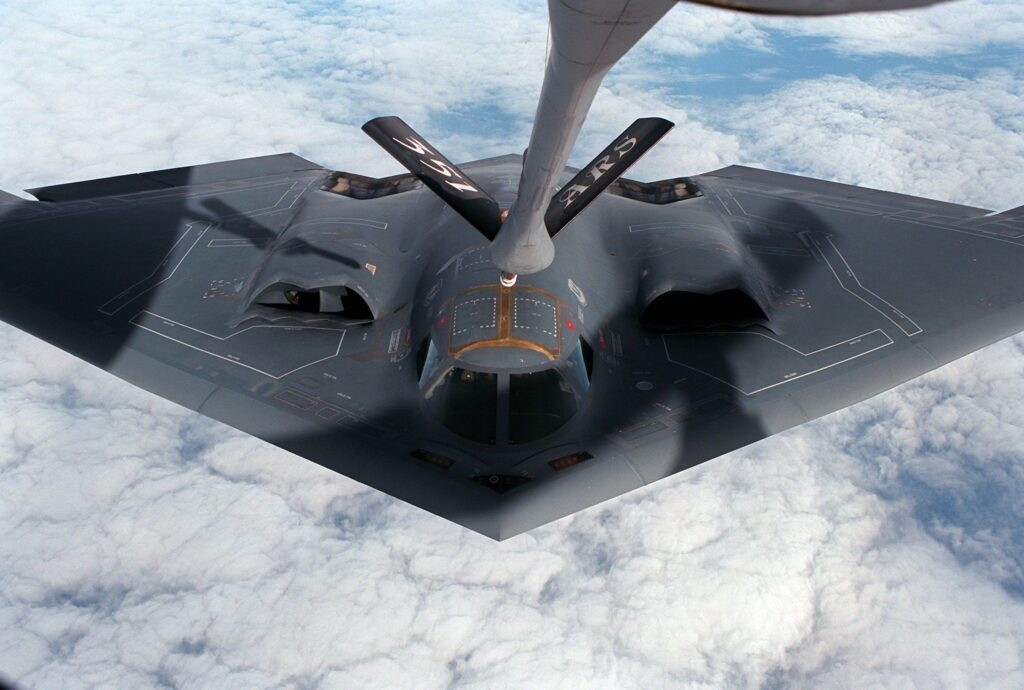
Few phrases capture the imagination like stealth technology. It conjures black, angular aircraft slipping past the world’s finest radar, unseen until the moment they strike. In 2026, that image is more real than ever, as a new generation of stealth aircraft takes to the skies. But here is the twist most business leaders miss: the same principle that hides a bomber is now hiding the attacker inside your network. Stealth has gone digital. Understanding how it works, in the air and online, is no longer just fascinating. For any organisation in Nigeria or beyond, it is fast becoming a matter of survival. What stealth technology really means Stealth technology is often imagined as a cloak of invisibility. It is not. Stealth is the science of shrinking your signature: the radar, heat, and electronic traces that give you away, until detection systems cannot lock onto you in time to respond. It works in three broad ways. Shape deflects radar energy away from its source, so the signal never bounces back. Special radar-absorbent coatings soak up much of what remains. And antennas, weapons, and engines are buried inside the airframe to keep the surface clean. The aim is not to vanish. It is to be detected so late and so faintly that the warning arrives too late to matter. That single idea, winning by avoiding detection, is the thread that connects a billion-dollar bomber to the malware sitting quietly on a company server. The new stealth arms race Stealth technology is in the middle of its biggest leap in decades. The United States Air Force’s B-21 Raider, built by Northrop Grumman, is billed as the world’s first sixth-generation aircraft. A second test aircraft is now flying, more than 5 billion dollars has been invested, and the programme is reported to be largely on schedule, with a far lower maintenance burden than the bomber it replaces. Its stealth technology is more refined than anything before it: smoother skin, deeply recessed intakes, and a tougher, lower-maintenance coating. In 2025, the United States also selected the Boeing F-47 as its next-generation fighter. China is racing alongside, having flown tailless sixth-generation prototypes known as the J-36 and J-50, both shaped to cut their radar signature by removing the vertical tails that reflect radar. Meanwhile, defenders are building counter-stealth radars designed to spot what was meant to stay hidden. The contest is no longer about raw speed. It is about who can stay invisible the longest. Stealth has gone digital Apply that same stealth technology mindset to cybersecurity, and you understand the most dangerous threats facing businesses today. The defining feature of a modern cyberattack is no longer a loud, obvious virus. It is silent. According to the Picus Red Report 2026, eight of the ten most common attacker techniques are now built for evasion, persistence, or hidden remote control: the heaviest concentration of stealth tactics the researchers have ever recorded. Attackers increasingly skip malware altogether. They live off the land, using the legitimate tools, software, and stolen passwords already inside your systems, so their activity looks exactly like normal IT work. Security firm ThreatDown sums up the modern intrusion in two words: speed and stealth. The intruder blends in, moves quietly, and is often gone with your data before anyone notices. In other words, the attacker has applied stealth technology to your network. And as with a stealth aircraft, the absence of an alarm is not proof that nothing is there. Why stealthy threats hit Nigerian and African businesses hardest This is not a distant problem. Nigeria is now the most attacked country in Africa. Check Point Research found that Nigerian organisations faced an average of 4,701 cyberattacks each week in January 2026, a 12 per cent rise year on year and more than double the global average of around 2,090. The cause is the very growth that is powering the economy: rapid expansion in fintech, banking, telecoms, cloud, and government services. Every new system widens the attack surface, and security spending often lags behind. Researchers now describe identity as the new security perimeter, because stolen credentials, not broken locks, have become the favoured way in. The most targeted sectors across Africa are government, financial services, and consumer goods: precisely the organisations holding the most sensitive data. For a stealthy attacker, that is the perfect hunting ground. How to see the invisible You cannot defend against what you cannot see, so modern security is built around visibility. A few priorities matter most: The aim is simple: shrink the attacker’s stealth advantage and cut the time between intrusion and detection. The bottom line Stealth technology teaches one hard lesson: the most dangerous threat is the one you never detect. In the air, that is a sixth-generation bomber. In business, it is an intruder who has lived inside your systems for weeks, looking just like one of your own staff. The organisations that thrive in 2026 will be the ones that win back visibility before the damage is done. Make your business harder to hide in. Cloud Technology Hub helps organisations across Nigeria and the UK detect and shut down stealthy threats, with cybersecurity, monitoring, and zero-trust solutions built for fast-growing businesses. Talk to our team about strengthening your defences. Email info@technohub.cloud Read More Here Author: Maryam Musa
Blockchain Technology in 2026: Beyond the Hype, and Why Africa Is Leading

For years, blockchain technology was sold on noise: coins, hype, and overnight fortunes. That story is over. In 2026, blockchain technology has quietly become something far more useful, a piece of working business infrastructure, and Africa is one of the clearest places on earth where it is delivering real value. For businesses across Nigeria, the UK, and the wider continent, this is the year blockchain stops being a buzzword and starts being a tool. Understanding it now is a genuine advantage. What blockchain technology actually is, in plain terms Strip away the jargon, and blockchain technology is simple to picture. It is a shared digital record, a ledger, that many parties can see at once. No single company owns it, and once an entry is added, it cannot be quietly changed or deleted. Every participant holds the same trusted version of the truth. On top of that ledger sit smart contracts: small programs that carry out an agreement automatically when conditions are met, with no middleman needed. That is the whole idea. Cryptocurrency is just one application built on it. The technology underneath is what matters for business. From hype to infrastructure: where blockchain technology stands in 2026 The big shift this year is that blockchain has moved out of the lab and into production. The World Economic Forum has called 2026 a defining moment for digital assets, and the evidence is in the boardroom, not the headlines. The headline trend is tokenisation: turning real assets such as bonds, funds, and property into digital tokens that can be traded and settled in minutes rather than days. JPMorgan filed to launch a tokenised Treasury fund in 2026, BlackRock has its own tokenised fund, and major banks are settling foreign exchange trades on-chain. Trade finance running on blockchain processed more than 1.5 trillion dollars in 2025. The appeal to enterprises is practical, not philosophical: faster settlement, fewer intermediaries, lower costs, and audit trails that cannot be faked. Why Africa and Nigeria are leading the real-world story Here is the part most global coverage misses. Africa is not a follower in this story. In real-world use, it is out in front. Between July 2024 and June 2025, Sub-Saharan Africa received more than 205 billion dollars in on-chain value, a rise of around 52 per cent year on year, making it one of the fastest-growing crypto regions in the world, according to Chainalysis. Nigeria alone accounted for roughly 92 billion dollars of that activity and ranked sixth on the 2025 global adoption index. The reason is not speculation. It is problem-solving. Sending 200 dollars to Sub-Saharan Africa through traditional channels costs around 9 per cent in fees, well above the global average of about 6 per cent. Stablecoins, the dollar-linked tokens that now make up roughly 43 per cent of the region’s crypto volume, can move the same money for under 1 per cent, and settle in minutes. Nigeria accounts for about 60 per cent of Sub-Saharan stablecoin inflows since 2019. For a young, mobile-first population facing currency volatility, that is transformational. One 2026 survey found that 95 per cent of Nigerian respondents preferred to receive payments in stablecoins. This is already a business reality, not a theory. Flutterwave has partnered with Polygon on what it calls the largest stablecoin deployment in Africa. Yellow Card moves stablecoin payments for corporates across more than 20 African countries, helping importers pay overseas suppliers without routing every transaction through New York or London. Visa is rolling out stablecoin settlement across the region. As one Visa executive put it, every institution that moves money now needs a stablecoin strategy. Beyond payments: the use cases that matter for business Payments are the loudest example, but blockchain technology earns its place across several business problems: The common thread is trust between parties who do not fully trust each other, delivered without a costly middleman. The regulatory turning point in Nigeria None of this scales without clear rules, and that is exactly what changed. In March 2025, President Tinubu signed the Investments and Securities Act 2025 into law. It formally recognises digital assets as securities and makes the Securities and Exchange Commission the apex regulator for the sector. The Central Bank of Nigeria has lifted its earlier restrictions on banks serving licensed crypto providers. The SEC has introduced a stablecoin framework requiring reserve backing, audits, and full anti-money-laundering and know-your-customer compliance, along with a regulatory sandbox for new products. Licensed local exchanges are already coming through the system. The effect is profound. Blockchain technology in Nigeria has moved from a legal grey zone to a regulated environment that businesses can build on with confidence. Crypto is legal, though not legal tender, and the days of operating in uncertainty are ending. That clarity is what unlocks serious enterprise adoption. What this means for your business Blockchain technology is a planning opportunity, not a gamble. A few principles keep it grounded: This is where the right technology partner makes the difference, turning a noisy, fast-moving field into a clear, costed plan you can act on. The bottom line Blockchain technology in 2026 is no longer about hype or get-rich-quick coins. It has become a quiet, dependable infrastructure, and Africa, led by Nigeria, is one of the clearest proving grounds for its real value. The businesses that understand it now will move first. Those still waiting for the noise to settle will find the leaders have already gone ahead. Explore blockchain with Cloud Technology Hub. We help businesses across Nigeria and the UK work out where blockchain and digital infrastructure deliver real value, from strategy to secure, compliant implementation. Talk to our team about turning the 2026 shift into a practical plan for your business. Email info@technohub.cloud Read More Here Author: Maryam Musa
Anthropic: The $965bn AI Giant Nigerian Firms Can’t Ignore

In May 2026, a company that many people outside tech had barely heard of quietly became the most valuable artificial intelligence start-up on earth. Anthropic, the maker of the Claude family of AI models, raised 65 billion US dollars in fresh funding at a 965 billion dollar valuation, overtaking its older rival OpenAI. For business leaders in Nigeria and across Africa, this is far more than a Silicon Valley headline. The rise of Anthropic is hard proof that enterprise AI has crossed the line from experiment to essential infrastructure. The question is no longer whether AI belongs in your business. It is whether your business is moving fast enough to use it. Who is Anthropic, and why is everyone watching? Anthropic is a San Francisco AI company founded in 2021 by a group of researchers who left OpenAI, led by chief executive Dario Amodei. From the very start, its pitch has been different from the crowd: build genuinely powerful AI, but put safety and reliability first. That positioning is now paying off commercially in spectacular fashion. The company’s run-rate revenue jumped from around 10 billion dollars at the end of 2025 to roughly 47 billion dollars by May 2026, a pace of growth almost unheard of for a business this size. Its flagship model, Claude, first launched in 2023, now attracts more than a million new sign-ups every single day. Anthropic is now widely expected to head toward one of the largest stock market listings in history. The safety-first bet that won over big business Here is what truly sets Anthropic apart. While many rivals raced for raw capability, Anthropic built its brand on trust: models that are less likely to deceive users, leak data, or be misused. Its newest flagship, Claude Opus 4.8, launched alongside the funding news and, by the company’s own evaluations, behaves more safely than any model it has released before. For enterprises, that emphasis matters enormously. The biggest barriers to AI adoption are rarely about clever features. They are about governance, data protection, and the fear of an AI system going wrong in front of a customer or a regulator. By making safety its headline rather than an afterthought, Anthropic speaks directly to the concerns that keep cautious boards awake at night. Claude is now where serious work happens Anthropic has pushed Claude well beyond a simple chat window. Claude Code, its tool for software development, now writes a meaningful share of the world’s public code, and Claude Cowork brings the same agentic ability to everyday office tasks like documents, spreadsheets, and analysis. Claude is also the first frontier AI model offered across all three major cloud platforms: Amazon Web Services, Google Cloud, and Microsoft Azure. In plain terms, the AI that just earned a 965 billion dollar valuation runs on the same cloud platforms African enterprises already use. This technology is not locked away in a distant lab. It is one integration away. There is a wider supply-chain story here, too. Anthropic’s latest funding brought in strategic chip partners, including Micron, Samsung, and SK Hynix, the very firms at the centre of the 2026 memory shortage. The AI boom driving Anthropic’s growth is the same force reshaping global hardware costs, a connection we explored in our recent piece on the 2026 memory shock. Nigeria’s AI paradox, and the opportunity inside it This is where the story comes close to home. Nigerians are among the most enthusiastic AI users on the planet. A Google and Ipsos study found that 88 per cent of Nigerian adults now use AI, the highest adoption rate of any country surveyed, with most using it for work and learning. Nigeria also ranks sixth in the world for workforce AI literacy. And yet, enterprise adoption tells a very different story. The same research places Nigeria just 19th globally for enterprise AI deployment: a 32-point gap between how ready the workforce is and how little businesses have actually rolled out. Across Africa, consulting firm PwC found that 82 per cent of organisations are running AI pilots, but very few have scaled them, and African firms invest on average only 2 per cent of revenue in AI, against 5 per cent for global leaders. The lesson is blunt. Your people are ready. Most organisations are not. The companies that close that gap first will pull decisively ahead, because the prize is enormous: the African Development Bank estimates AI could add up to 1 trillion dollars to the continent’s economy by 2035. From pilots to real deployment: what to do now The Anthropic story is a signal, not a spectator sport. A few deliberate moves turn AI ambition into measurable results: The bottom line The 965 billion dollar moment for Anthropic is not just a milestone for one company. It is a marker for the entire economy: enterprise AI is now real, funded, and racing ahead. Nigeria has the talent to compete with anyone. What it needs is for businesses to move with the same urgency their people already show. The window to lead, rather than follow, is open right now. Move from AI curiosity to real deployment with Cloud Technology Hub. We help businesses across Nigeria and the UK adopt AI and automation safely, from strategy and secure integration to hands-on training. Talk to our team about building your AI roadmap. Email info@technohub.cloud Read More Here Author: Maryam Musa