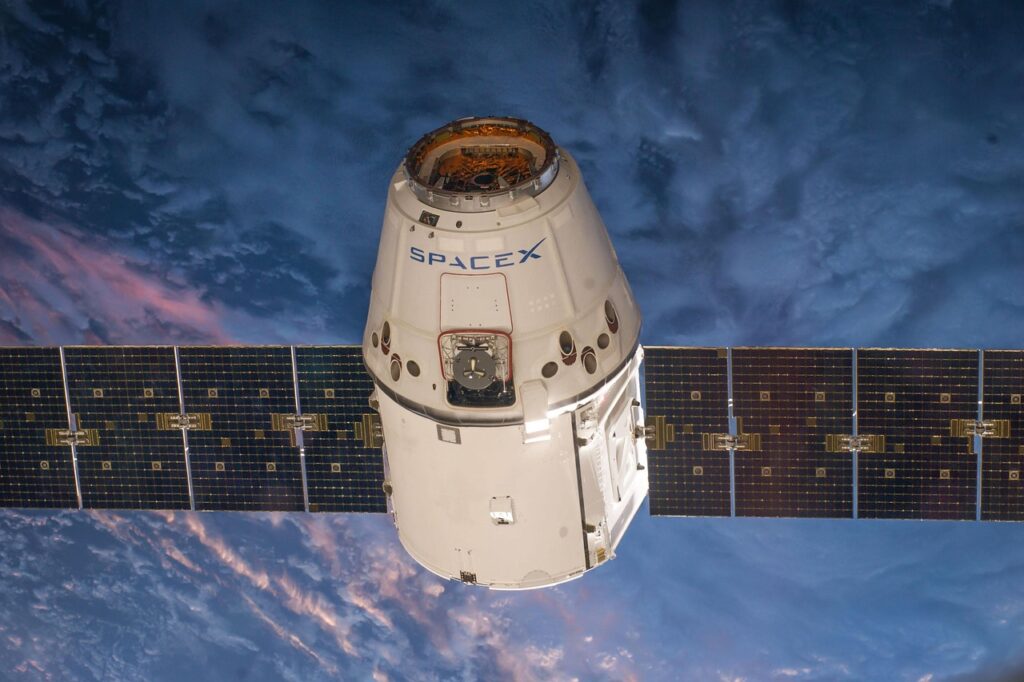
This week, a private company that builds rockets is about to become the most expensive market debut the world has ever seen. And if you only watch the launch footage, you’ll miss the actual story.
On Wednesday, June 11, SpaceX is expected to price its shares. The following day, Thursday, June 12, it begins trading on the Nasdaq under the ticker SPCX. The plan: sell around 556 million shares at a fixed price of $135 each, raising roughly $75 billion and landing on a valuation near $1.75 trillion.
To put that in human terms: the previous record holder for the largest IPO ever was Saudi Aramco, which raised about $29 billion back in 2019. SpaceX is aiming to more than double that. In one listing, Elon Musk’s space company would be worth somewhere in the neighbourhood of Meta, a level those companies needed decades on the public market to reach.
But here’s the part nobody puts in the headline.
The number that breaks the scale
Investors aren’t lining up because they want a slice of the next moon landing. They’re lining up for something far less cinematic and far more profitable: The internet.
SpaceX has quietly become two companies wearing one jumpsuit. One-half lights up the sky with Falcon 9 and Starship. The other half, Starlink, beams broadband down to more than 10 million subscribers across 155 countries, and it’s the part that actually makes money. Starlink posted over $1 billion in operating profit in the first quarter of 2026 alone and now accounts for the majority of SpaceX’s revenue.
So when the market values SpaceX at $1.75 trillion, it isn’t paying for spectacle. It’s paying for a subscription business with a satellite dish on it. The rockets are the supply chain. The recurring internet bill is the product.
That reframing matters because it changes what kind of company you’re actually buying.
The catch: a company priced for perfection
Not everyone is convinced the price tag adds up.
At $135 a share, SpaceX would be valued at roughly 95 times its 2025 revenue of about $18.7 billion. For comparison, most large, profitable tech companies trade at a small fraction of that. Morningstar analysts went on record calling the company “significantly overvalued,” pinning their own estimate closer to $780 billion, less than half the IPO target, and suggesting patient investors may get cheaper entry points after the dust settles.
Then there’s control. SpaceX is using a dual-class share structure: the public buys Class A shares, while Musk and insiders hold Class B shares carrying far more voting power. Musk reportedly isn’t selling a single share of his own. So you can own a piece of the upside without owning a meaningful say in the direction. It’s a familiar founder-led playbook. Alphabet, Meta and Snap all did versions of it, but it’s worth knowing before you wire any money.
In short, this is a remarkable business priced as if everything goes right. Starship still burns cash. A large chunk of launch revenue leans on government contracts. And satellite broadband is about to get a lot more crowded. The bull case is genuinely exciting. The bear case is genuinely sober. Both are true at the same time, which is exactly what makes it interesting.
The real engine isn’t the rocket, it’s repetition
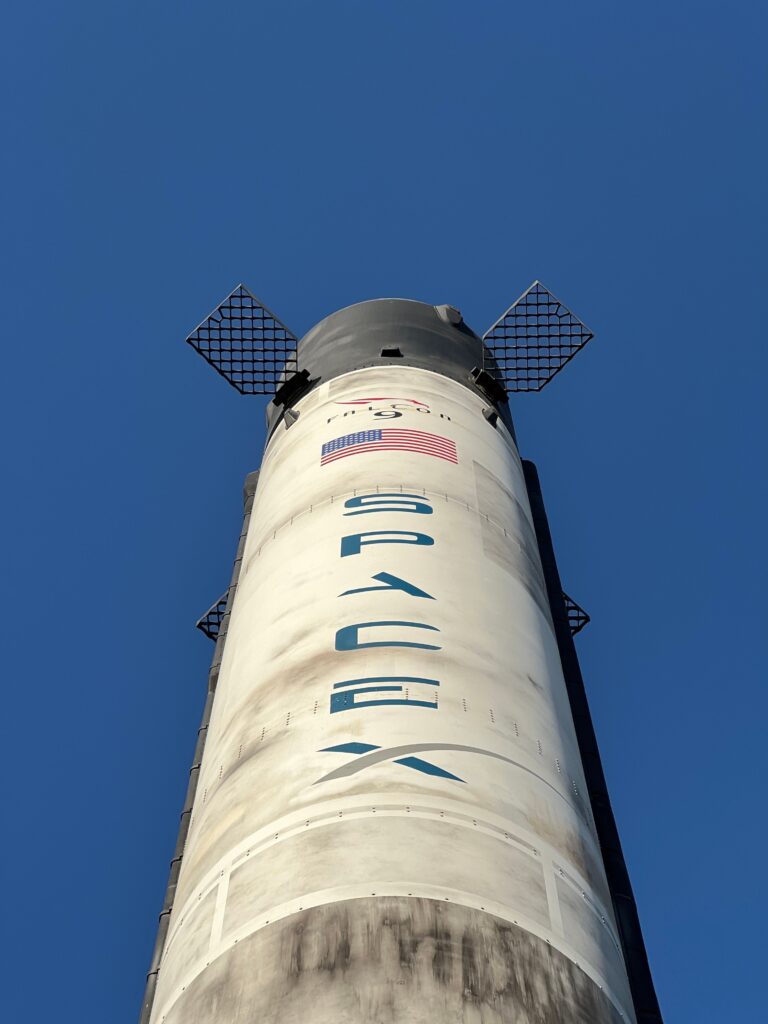
If you want to understand why investors trust SpaceX’s machine, look at what happened on June 7: a Falcon 9 booster flew for a record-breaking 35th time and landed again.
That’s the whole thesis in one image. SpaceX didn’t win by building the flashiest rocket. It won by turning launches into something boring and repeatable: fly, land, refurbish, fly again until the cost of reaching orbit collapsed. Reusability is the quiet superpower. It’s the same logic behind cloud computing: the value isn’t in one heroic event, it’s in doing the unglamorous thing reliably, at scale, until it compounds.
Starlink is the logic pointed at the planet’s connectivity gap. And that’s where this story stops being about a faraway billionaire and starts being about us.
Why this story has a Nigerian postcode
Here’s what often gets lost when this gets covered as American finance news: Nigeria is one of the places where Starlink’s promise is already real.
When Starlink launched here in early 2023, Nigeria was the first African country to get it. It had fewer than 24,000 subscribers. By the end of 2025, it had climbed to roughly 92,000, making it the country’s second-largest internet service provider, behind only Spectranet. Analysts had openly predicted it could take the top spot by mid-2026. Today, just three providers, Spectranet, Starlink and FibreOne, control nearly 70% of Nigeria’s ISP market.
Why such a rush? Because Nigerians have spent years paying for internet that buffers when it matters most. Starlink showed up offering reliable, high-speed connections in places where fibre never reached, rural towns, remote offices, anywhere terrestrial infrastructure gave up. Yes, it’s expensive: hardware runs in the region of ₦669,000 with monthly plans around ₦57,000–₦75,000. And demand was strong enough that orders had to be paused in major cities, including Lagos, Abuja and Port Harcourt.
So the trillion-dollar number flashing across Wall Street this week is, in part, built on a Nigerian small-business owner deciding she’s done losing client calls to a dead connection. That’s not a metaphor. That’s a line item in the S-1.
So… is it worth buying into?
The honest answer: that depends entirely on what you believe and what you can afford to be wrong about, and it’s worth saying plainly that this is general information, not financial advice.
A few things worth watching rather than reacting to:
- The first-day pop versus the long game: New listings move violently. The price on day one is a mood, not a verdict.
- The multiple: At 95x revenue, the market is pricing in years of flawless execution. Ask yourself whether you’d pay that for any business, then decide.
- Starlink’s trajectory, not the rocket launches: The launches are the marketing. The subscriber growth and margins are the business.
- Who actually holds the steering wheel: Dual-class shares mean control stays concentrated regardless of how many shares trade.
If you can’t buy pre-IPO shares, and most people can’t, the calmer move is to understand the theme rather than chase the ticker.
The bigger picture
Strip away the countdown clocks and the record-breaking valuation, and what’s happening this week is a quiet redefinition of what “infrastructure” means. For most of history, connecting a country meant digging trenches and laying cable. SpaceX is betting the next billion users get connected by something orbiting 550 kilometres overhead instead.
That’s a profound shift, and it lands hardest in exactly the markets that incumbents ignored for decades, places like Nigeria, Brazil and Indonesia, where the gap between wanting fast internet and having it has always been widest.
So watch the IPO. It’s genuinely historic. But don’t mistake the rocket for the revolution. The revolution is the dish on the roof, the signal in the sky, and the slow, compounding business of finally connecting the people the old map left out.
The launch is the show. Connectivity is the company.
Read More Here