Nigeria has recorded its first tele-robotic surgery. On Saturday, 19 September 2026, a surgeon at Redeemer’s Health Village in Mowe, Ogun State, operated remotely on a patient at Nisa Premier Hospital in Abuja, about 500 kilometres away, removing a kidney affected by a cancerous tumour. The organisers have described it as the first telesurgery in West Africa.
What Happened in Nigeria’s First Tele-Robotic Surgery
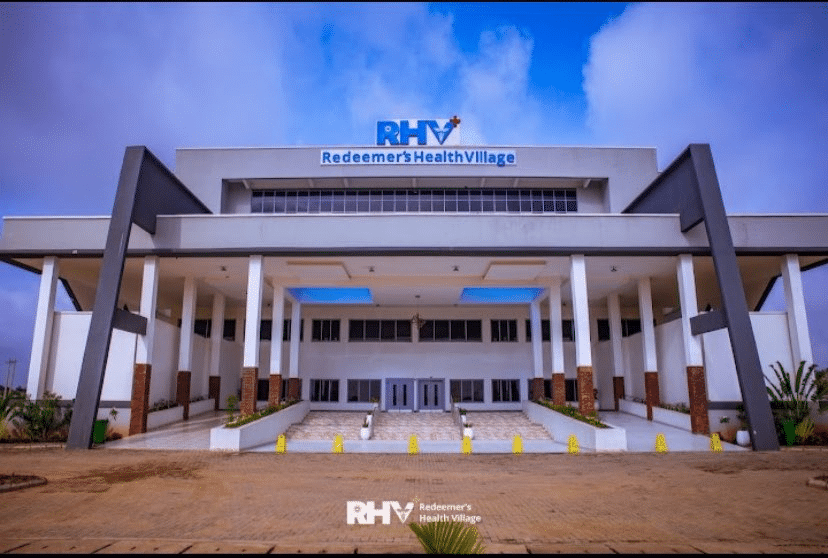
The surgery was performed in real time from a Toumai robotic console at Redeemer’s Health Village on a patient at Nisa Premier Hospital. The procedure was a robot-assisted right radical nephrectomy, an operation to remove a kidney, in this case one affected by a cancerous tumour.
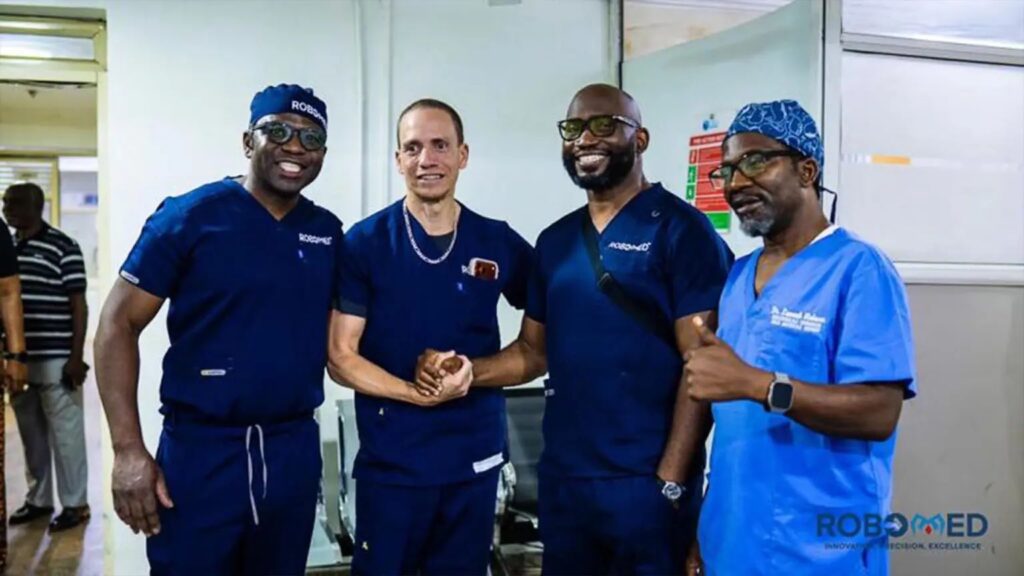
It was led by Professor Obi Ekwenna-Davis, a professor of urology and transplantation and co-founder of RoboMed Global. He controlled the robotic system from the console in Ogun State while the patient remained in Abuja. Before the operation, he told journalists that he would be able to operate as if the patient were sitting next to him.
The operation lasted about three hours, with brief pauses to check that the equipment and systems were working properly. After the procedure, the medical team said the patient had done very well and lost minimal blood, and was expected to go home within 24 hours.
The specialist was in Ogun. The patient never had to leave Abuja.
The Team Behind the Tele-Robotic Surgery
The procedure was a collaboration between three organisations, with a multidisciplinary team working across both locations.
- Redeemer’s Health Village, Mowe, Ogun State: a 300-bed multispecialty hospital established by the Redeemed Christian Church of God, where the surgeon operated from the console and where selected journalists watched the procedure.
- Nisa Premier Hospital, Abuja: the private hospital where the patient was treated. Its founder and chief executive, Dr Ibrahim Wada, said the facility has served as a centre for robotic surgery since November 2025.
- RoboMed Global: the robotic surgery company co-founded by Professor Ekwenna-Davis, which runs the programme.
Dr Wada said the patient had received specialist surgical expertise from across the country without leaving Abuja, and described the operation as an example of what becomes possible when Nigerian institutions build together. Dr Adedamola Dada, chief executive of Redeemer’s Health Village, described it as the first telesurgery in West Africa.
The Connection That Made It Possible
In tele-robotic surgery, the surgeon’s movements at the console must reach the robotic arms beside the patient without interruption. Reports on the procedure say Starlink satellite internet provided the primary connection, with MTN broadband serving as a backup.
Professor Ekwenna-Davis explained that uninterrupted communication was necessary for his commands to reach the robotic system in real time, which is why the backup was in place. Dr Dada said measures had been put in place to address possible connectivity problems through reliable networks, while acknowledging that connectivity remains one of the challenges as telesurgery expands.
How Tele-Robotic Surgery Works
The team carefully corrected a common misunderstanding. Dr Kunle Onakoya, chairman of the Redeemer’s Health Village board, explained that robotic surgery does not mean a robot operates on its own. The robot stays under the control of a human surgeon, with the technology magnifying the surgeon’s movements and improving precision.
The Toumai system used in this operation is manufactured by Shanghai MicroPort MedBot. It combines three-dimensional visualisation with multiple robotic arms that assist the surgeon during the procedure. In tele-robotic surgery, the surgeon’s console and the robot are simply in different places, joined by a data connection, with a medical team present at the patient’s side.
How Nigeria Got Here: The Road to Tele-Robotic Surgery
The September operation built on work that began in 2025. On 22 November 2025, robotic procedures were carried out at Nisa Premier Hospital using the Toumai system. According to the operators, patients who had a robotic nephrectomy and a robotic prostatectomy were discharged within 12 and 48 hours, respectively.
On 31 December 2025, Vanguard reported that NAFDAC had approved the Toumai system for clinical use after assessing its safety and efficacy, a clearance described as the first for a robotic surgery platform in West Africa. At the time, RoboMed said it planned to expand access through partnerships with hospitals across Nigeria and the region, and to set up an academy to train local surgeons. Nine months later, the same platform was used across 500 kilometres.
Could Tele-Robotic Surgery Open the Door Across Nigeria?
The need is well documented. According to the Medical and Dental Council of Nigeria, the country had 74,543 registered doctors for about 218 million people in 2022, a ratio of roughly one doctor to every 3,500 people against the World Health Organization’s recommended one to 600. A peer-reviewed study citing those figures also reports that Nigerians spent over $1 billion on medical tourism in 2022.
The team behind the operation has framed tele-robotic surgery as a direct response to that gap. Dr Dada said the aim of introducing robotic surgery and telesurgery at Redeemer’s Health Village was to reduce medical tourism and improve access to complex procedures within Nigeria. Professor Ekwenna-Davis said the technology could let Nigerians access specialised expertise without travelling abroad, and could allow Nigerian medical professionals in the diaspora to contribute their skills remotely.
He was also clear about where things stand, describing the operation as the beginning: a test and a pilot of how technology can help patients.
What the team says comes next
- A training academy: Redeemer’s Health Village and RoboMed Global plan to establish a robotic surgery academy to train doctors, surgeons, nurses, biomedical engineers and medical product specialists, with a target of at least 150 surgeons within two years.
- Government support for skills: Dr Dada called on the government to support local expertise through scholarships and training programmes for surgeons, nurses and biomedical engineers.
- A demonstration of what is possible: Dr Onakoya said the initiative was not primarily profit-driven, but aimed at demonstrating what modern healthcare could offer Nigerians.
What the team says could slow it down
The organisers have not presented this as a finished system. They have pointed to connectivity, including disruption from weather, and to the supply of trained people as the challenges that will decide how quickly tele-robotic surgery can spread. Both are practical questions of infrastructure and skills rather than of whether the surgery itself can be done.
A Pilot With National Ambitions
On 19 September, a surgeon in Ogun State removed a cancerous kidney from a patient in Abuja, and the patient was expected home the next day. The team behind it calls it a beginning, not an end point. Whether tele-robotic surgery becomes part of everyday care in Nigeria will depend on what they have already named: reliable connectivity, trained people and the support to scale both.
BUILDING THE CONNECTIVITY HEALTHCARE DEPENDS ON
Cloud Technology Hub helps hospitals and healthcare providers design resilient networks, secure connected systems and protect sensitive patient data.
Talk to our team at info@technohub.cloud. TALK
Leave a comment and Read More Here