

Micron Technology has become one of the most important companies in the world that most people have never heard of. If your business buys servers, laptops, storage, or cloud capacity, a decision made inside Micron factories is already shaping your 2026 budget. The reason is simple: the global rush to build artificial intelligence has triggered the worst memory shortage in four decades, and Micron sits right at the centre of it.
For businesses across Nigeria and the wider continent planning IT spend this year, this is not distant industry news. It is a direct cost pressure, and understanding it early is a real competitive advantage.
Who is Micron Technology, and why does it matter?
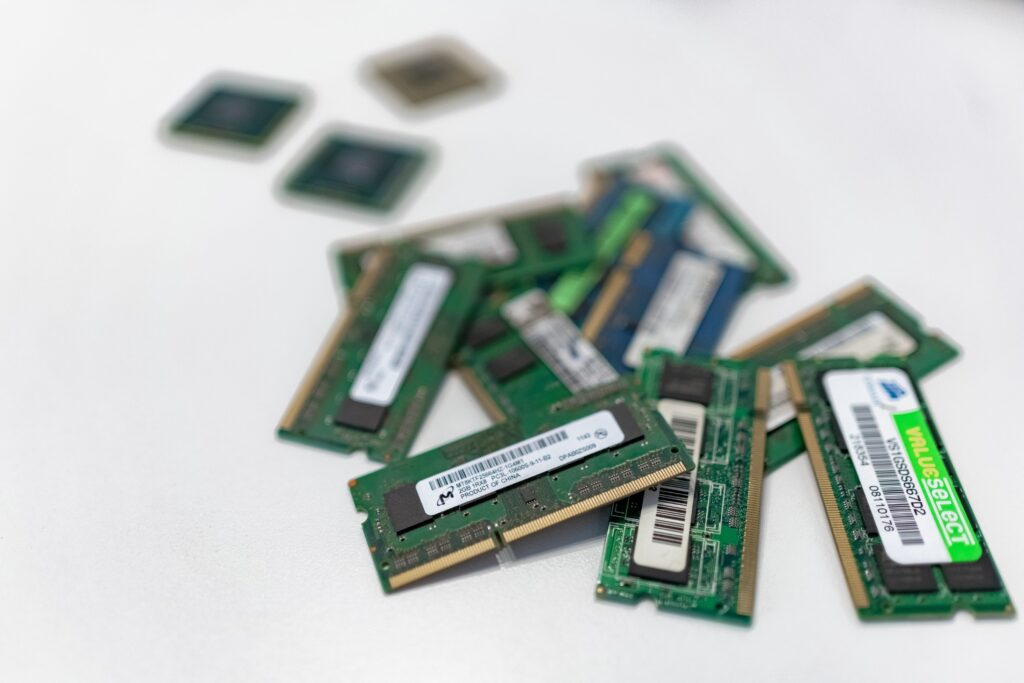
Micron Technology is one of only three companies on earth, alongside Samsung and SK Hynix, that produce almost all of the world’s DRAM and NAND flash memory. DRAM is the working memory inside every server, PC, and phone. NAND is the storage inside every SSD. Without these chips, no data centre runs and no AI model trains.
That three-company grip gives the group enormous pricing power. When Micron and its two rivals change strategy, the entire technology supply chain moves with them. In early 2026, that is exactly what happened.
The AI memory boom that changed everything
The trigger is High Bandwidth Memory, or HBM: the specialised, ultra-fast memory that feeds the AI accelerators sold by Nvidia and AMD. Demand has been extraordinary. Micron Technology has confirmed that its entire 2026 HBM output is already sold out under long-term contracts, with supply tightness expected to run well beyond the year.
To chase that demand, Micron has committed around 200 billion US dollars to new manufacturing capacity. The company projects the HBM market alone could reach 100 billion dollars by 2028, growing close to 40 per cent a year.
The financial results show why. Micron Technology recently reported gross margins near 75 per cent, roughly triple what the memory business earned only two years ago, with guidance pointing even higher. As the company’s chief executive put it, memory is at the very heart of the AI revolution.
How a boom became a global memory shortage
Here is the part that reaches every IT buyer. HBM is costly to make, and each gigabyte of it swallows around three times the factory wafer space of standard memory. So as Micron and its rivals pour capacity into HBM for AI, they starve the supply of the ordinary DRAM and storage used in everyday servers and computers.
The result has been dramatic. Industry trackers reported DRAM prices climbing roughly 171 per cent over the year, outpacing even gold. DDR5 spot prices quadrupled from September 2025. Research firm Gartner has forecast a further 47 per cent rise in DRAM prices across 2026. The tech press has nicknamed the crisis RAMmageddon.
Analysts at IDC have been blunt about what this is. They describe it not as a normal boom-and-bust cycle that ends when factories catch up, but as a potentially permanent reallocation of the world’s chip-making capacity toward AI. That is what makes this shortage different from every memory squeeze that came before it.
What the memory shortage means for Nigerian and African businesses
For organisations across Nigeria and the continent, the effects are already landing in three clear ways.
Hardware is getting more expensive. Major vendors, including Dell, HP, and Lenovo, have raised PC and server prices by roughly 15 to 20 per cent, and high-memory server configurations are rising fastest of all.
Lead times are stretching. A server that shipped in two to three weeks in 2024 can now take six to eight weeks, because suppliers serve their largest customers first. Smaller buyers ordering one system at a time go to the back of the queue.
Procurement power is shifting. In a contested market, leverage now depends less on order volume and more on strong supplier relationships and forward planning.
This lands at a moment of fast local growth. Nigeria’s data centre market is forecast to expand at close to 16 per cent a year through 2031, and corporate cloud spending across Africa is rising 25 to 30 per cent annually. In other words, demand for computing is surging at the very moment the components behind it are becoming scarce and expensive.
How long will the squeeze last?
Relief is not close. New chip factories take years to build and tune. Micron Technology expects its first new Idaho plant to begin producing DRAM only in 2027, and Intel’s chief executive has warned the industry may see no relief until 2028. The sensible planning assumption is elevated memory and storage prices, and longer lead times, well into 2027 and possibly beyond.
What smart IT leaders should do now
The Micron story is a planning signal, not a reason to panic. A few practical moves protect your budget:
- Plan hardware refreshes earlier, and budget for higher memory and storage costs rather than last year’s prices.
- Lock procurement in advance where you can, and value supplier relationships over one-off bargains.
- Right-size every purchase: specify the memory and storage you genuinely need, not the maximum.
- Weigh cloud and local colocation against buying outright, since moving capital cost to a managed provider can smooth out price spikes and supply risk.
- Get expert guidance on the trade-offs before you commit capital.
This is exactly where the right technology partner earns its place: turning a global supply shock into a clear, costed plan you can act on.
The bottom line
Micron Technology is no longer just a chip maker. It is a barometer for the cost of computing itself. The AI boom that made the company one of the year’s standout performers is the same force pushing up the price of every server and SSD your organisation will buy in 2026. The businesses that plan around it now will protect their margins. Those who wait will pay more, and wait longer.
Plan ahead with Cloud Technology Hub. We help businesses across Nigeria and the UK navigate exactly these decisions, from cloud infrastructure and enterprise storage to OEM hardware sourcing and AI readiness.
Talk to our team about building an IT plan that holds up against the 2026 memory shock.
Email info@technohub.cloud
Read More Here
Author: Maryam Musa