
Nigeria rents its internet, and most people only notice when the lease gets broken. Here’s what that looks like up close. Your phone stops getting a signal on a Tuesday afternoon. You assume it’s the network, because it’s usually the network. By the time you reach the service centre the next morning, your number is sitting on someone else’s SIM. Your WhatsApp has been re-registered on their handset. Eleven years of customer conversations, order history, and price negotiations now belong to a stranger. So does the quiet trust that comes from being the contact a buyer already has saved in their phone.
Nobody is coming to help. There’s no account recovery team to call, and no ombudsman either. There’s also no contract between you and the company that just lost your business, because you were never their customer. You were their user.
This happens in Nigeria often enough to be unremarkable. Banks here have reported a sharp rise in SIM swap fraud. Researchers, meanwhile, have documented organised syndicates paying insiders at telcos to process the swaps, for a fraction of what they stand to steal. The money lost gets counted. The commercial identity lost does not, simply because no framework exists to count it. That gap is the clearest proof that Nigeria rents its internet, and it starts with something as ordinary as a phone number.
What Nigeria Actually Runs On
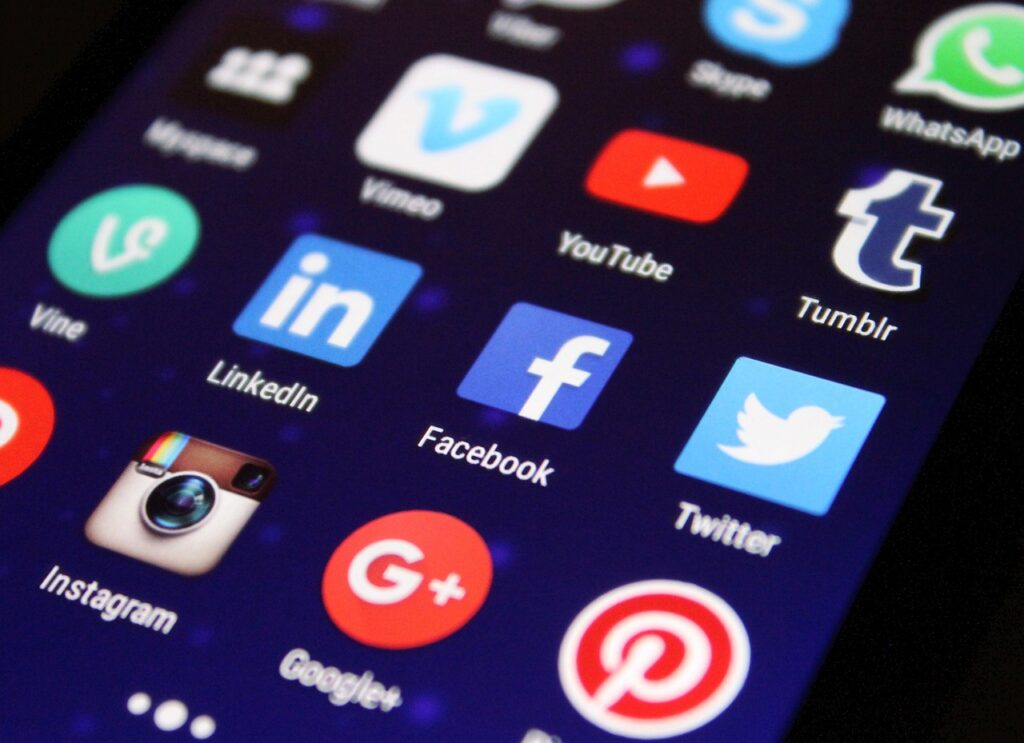
Research commissioned by Meta, carried out by Public First, put 14 million Nigerian small and medium enterprises on its apps in 2025. It credits them with contributing around two billion dollars to GDP. Treat those numbers as advocacy, because they are. Even so, the direction is right, and anyone who has bought anything in this country knows it. Google handles close to 99% of Nigerian searches. Android is the phone. WhatsApp is the conversation.
The distinctive thing isn’t the market share, though. It’s the absence of anything underneath it.
In most wealthy markets, platforms sit on top of a domestic internet, acting as a distribution layer. A business has a website, a merchant account, a CRM, and an email list, then uses Instagram to bring people to those things. In Nigeria, the platform is the entire stack instead. Shopfront, catalogue, customer service desk, negotiation channel, brand identity, and payment coordination all live inside three apps owned by two American companies. There’s no floor beneath the platform, so if the platform goes, nothing catches you.
This wasn’t a choice made against an alternative, either. There simply was no alternative. Nigeria skipped the part where a country builds its own consumer internet, and went straight to leasing one instead. That single decision is the reason Nigeria rents its internet today, rather than owning any part of it.
Infrastructure, Not Social Media
Meta’s own commissioned report describes its apps as vital digital infrastructure for Nigeria. So, take the company at its word, and then follow that word to its conclusion.
The Central Bank of Nigeria designates certain payment systems as systemically important. That designation carries real obligations: uptime expectations, incident reporting, resolution planning, supervision. The logic isn’t punitive. Rather, once something becomes load-bearing for the wider economy, its ownership stops being a purely private matter. That’s because the consequences of its failure aren’t privately contained anymore.
WhatsApp is load-bearing in exactly this sense. It carries an enormous share of Nigerian commercial intent, and it’s also now the country’s primary AI surface: 93% of Meta AI prompts across Sub-Saharan Africa arrive through WhatsApp. Still, none of the obligations that come with being “systemically important” attach to any of it. There’s no uptime commitment to Nigeria, no duty to report an outage to a Nigerian regulator, and no resolution plan on file anywhere. Nor is there local recourse when a business account simply disappears.
When Meta’s services went dark globally for roughly six hours in October 2021, local coverage framed it as social media going down. It was closer, in practice, to an unannounced trading halt across a large slice of the informal economy. And no institution in Nigeria had the standing to ask why, or the right to be told.
The Terms of the Lease
Nigeria has run the experiment, and the results are on the record, in two separate cases with two different endings.
In July 2024, the Federal Competition and Consumer Protection Commission fined Meta and WhatsApp $220 million. This followed a 38-month joint investigation with the Nigeria Data Protection Commission into data practices and consent. The Competition and Consumer Protection Tribunal upheld that penalty in April 2025, and also ordered Meta to pay a further $35,000 to cover the cost of the investigation. That one, at least, still stands.
The second case went differently. In February 2025, the NDPC separately fined Meta $32.8 million over behavioural advertising and cross-border data transfers. Meta appealed, and in court filings, raised the prospect of shutting Facebook and Instagram down in Nigeria rather than comply. The FCCPC called it a pressure campaign. Then, in late October 2025, the pressure worked. Meta and the NDPC filed a settlement, which the Federal High Court adopted as a consent judgment on November 3, 2025. It didn’t reduce the fine. Instead, it extinguished it entirely. Meta paid only the government’s legal costs and agreed to compliance changes, nothing more. In response, the Data Privacy Lawyers Association of Nigeria filed suit in December 2025, challenging the judgment directly.
You can hold any view of the underlying merits here and still see the shape of it. Nigeria won on the $220 million case, yet gave up the $32.8 million one. A regulator weighing enforcement against the possibility that 50 million citizens lose their marketplace isn’t negotiating from a position of strength. It’s negotiating, instead, with a landlord who can change the locks.
The One Lever That Cuts Both Ways
The only lever the Nigerian state has ever reached for cuts the wrong way, too. The Twitter ban in 2021 ran for 222 days, at an estimated cost to the economy of roughly $250,600 an hour, by NetBlocks’ methodology. Nigeria pulled the one lever available, and the pain landed almost entirely on Nigerians themselves. That’s exactly what it means to have no leverage that isn’t also self-harm.
Nigeria Rents Its Internet Down to the Cables Underneath It
Google’s Equiano cable landed in Lagos in April 2022, with a design capacity of 144 terabits per second. That’s well beyond every legacy cable serving the region combined. Meta’s 2Africa consortium, similarly, lands at both Lagos and Akwa Ibom, with up to 180 terabits per second on its western trunk.
So the same two companies own the transport layer, the operating system, the browser, the search box, the advertising auction, and the messaging app. That vertical stack has no matching regulatory stack underneath it, which is what it really means when Nigeria rents its internet. The NCC has telecoms. The FCCPC has competition. Data, meanwhile, sits with the NDPC. Nobody has the whole thing, and the whole thing is the point.
The Honest Part
None of this is a story about being victimized, and it would be dishonest to write it that way.
These platforms delivered what Nigerian institutions did not. Consider near-zero cost distribution for a trader in Kano selling to Lagos, discovery without a marketing budget, and a trust layer that let strangers transact safely. Whatever you make of the commissioned research, the underlying claim is true. An enormous amount of Nigerian economic life exists simply because these tools were free, worked on cheap phones, and didn’t ask permission of anybody.
Dependence created by real value is still dependence, though. Building on land you don’t own is entirely rational when you can’t buy land in the first place. It simply means being clear-eyed about what you actually own, which is the building, not the ground beneath it.
What Would Change the Fact That Nigeria Rents Its Internet
Not a ban. Nigeria tried that already, and paid dearly for it.
Designation. A threshold framework where any platform above a defined share of national commercial or communications activity acquires real duties: incident disclosure, availability reporting, and an account recovery process with a named local contact and a stated response time. This is availability regulation, not content regulation, and conflating the two is exactly how this conversation keeps getting derailed.
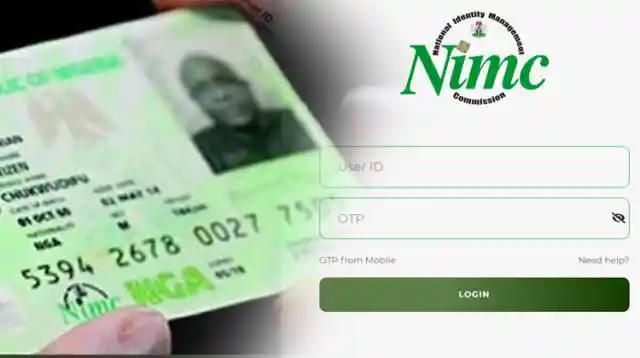
Identity. The SIM is the weakest component in the entire national stack. However, it isn’t owned by any platform, which makes it the one part Nigeria can actually fix. Consider cooling-off periods on swaps, multi-factor confirmation, and liability that sits with whoever executed the swap, rather than with the person who lost everything. The NIN infrastructure already exists. Use it for this.
Portability. A business should be able to leave with its customer relationships: contacts, order history, catalogue. The Nigeria Data Protection Act 2023 contains portability rights in principle. Nobody, however, has operationalized them for a WhatsApp Business account, which is exactly where they’d matter most.
Capability. This is the unglamorous one. It means route diversity on subsea cables, local peering to relieve the Lagos bottleneck, and eventually a domestic layer for commerce and discovery that doesn’t depend on anyone’s goodwill. Renting is cheaper than owning, right up until the day it suddenly isn’t.
The Point
Strip out the enforcement drama, and one fact survives all of it. A foreign board, accountable to shareholders in another jurisdiction, makes the decisions that determine whether millions of Nigerians can trade tomorrow. Two decades of Nigerian commercial history sit in databases nobody here controls, under terms nobody read, revocable at will. The only thing standing between that history and its deletion is that deleting it would be commercially irrational.
That’s not a conspiracy, in other words. It’s a tenancy. And the first step in renegotiating any tenancy is admitting that you’re a tenant.
[INTERNAL LINK: Talk to our team about data sovereignty and infrastructure resilience for your organization →]
Frequently Asked Questions
What does it mean to say Nigeria rents its internet? It means that instead of a domestic internet layer, with local websites, merchant accounts, and CRMs, most Nigerian commerce runs directly inside apps owned by Meta and Google. There’s no floor underneath the platforms as a result. So if they go down or change a policy, there’s no fallback layer to catch the business built on top of them.
Did Meta actually get fined $220 million by Nigeria? Yes. The FCCPC fined Meta and WhatsApp $220 million in July 2024, after a 38-month investigation into data and consent practices. Nigeria’s Competition and Consumer Protection Tribunal then upheld the fine in April 2025.
What happened to the separate $32.8 million fine? That was a different case, from the Nigeria Data Protection Commission, issued in February 2025 over behavioural advertising and cross-border data transfers. Meta and the NDPC settled it instead of litigating further. The Federal High Court adopted the settlement as a consent judgment in November 2025, and the fine itself was set aside rather than paid.
How much did Nigeria’s 2021 Twitter ban cost? NetBlocks estimated the cost at roughly $250,600 per hour, for the 222 days the ban lasted, based on World Bank, ITU, and census data.
Why can’t Nigeria just regulate WhatsApp like a bank? It doesn’t have to be identical, but the logic is similar. When something becomes load-bearing for the economy, the argument goes, its ownership stops being a purely private matter. Right now, though, no Nigerian regulator has authority over the platform’s uptime, incident reporting, or account recovery process, even though it functions as commercial infrastructure for millions of users.
Read More Here