
Digital identity in Africa is quietly becoming one of the continent’s most consequential technology stories. A digital identity is more than a login. It’s the key to healthcare enrolment, a bank account, a SIM card, and, in many countries, the right to vote.
Roughly 470 million people across Sub-Saharan Africa still have no official proof of who they are. That single gap explains why digital identity in Africa has become both an urgent challenge and a rare opportunity. This piece breaks down what digital identity actually means. It also covers why Nigeria’s rollout matters so much, and what a system built for people, not just governments, would need to look like.
What Is Digital Identity, Really?
Digital identity is the electronic version of a person’s real-world identity. It typically includes a unique identifier, such as a number or username. It also includes verified attributes like a name, date of birth, or biometric data, plus credentials stored on a platform, centralised or decentralised. And it includes the digital trail a person leaves across apps and services.
Done well, digital identity helps governments serve citizens more efficiently. It also helps individuals reach services that would otherwise stay out of reach. Done poorly, though, it becomes a surveillance tool, or worse, a mechanism of exclusion. That tension, between empowerment and control, is exactly what makes digital identity in Africa such high-stakes territory right now.
Digital Identity in Africa: The Size of the Gap
Africa presents a genuine paradox. Mobile phone use is booming. GSMA projects roughly 623 million unique mobile subscribers across Sub-Saharan Africa by 2025, close to half the region’s population. Meanwhile, an estimated 470 million people across that same region still lack any form of official identification.
That gap carries real consequences. Without an ID, people are routinely excluded from health insurance enrolment. Opening a bank account or building a credit history becomes nearly impossible without one. And without an ID, registering to vote and taking part in democratic processes is often out of reach entirely.
Because of that gap, several governments are racing to close it. Ghana has its Ghana Card. Kenya has Maisha Namba. Nigeria has the National Identification Number, or NIN. Each approach carries its own tradeoffs. None of them has fully solved the problem yet.

Three National Models Worth Watching
Ghana’s Ghana Card
Ghana’s National Identification Authority has issued the Ghana Card to more than 19 million citizens as of 2026. Roughly 217,000 registered non-citizens hold one too. The card doubles as a tax identification number. It’s now required to open a bank account or apply for a passport, which has pushed adoption well beyond the slower early registration years.
Kenya’s Shift to Maisha Namba
Kenya’s earlier Huduma Namba program ran into legal and public trust problems. It was ultimately discontinued. Kenya replaced it in 2023 with Maisha Namba, a lifelong personal identification number tied to a redesigned legal and data-protection framework. As of 2026, roughly 13 million Kenyans hold the new Maisha Card, with 20,000 to 30,000 more issued daily.
Spotlight on Nigeria: The NIN Push
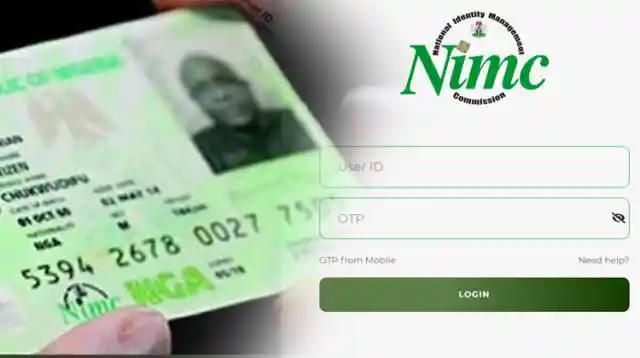
Nigeria’s National Identity Management Commission, or NIMC, runs the country’s flagship digital identity program: the National Identification Number, or NIN. It’s now mandatory for SIM registration, banking, and a growing list of government services. Nigeria’s scale makes it the clearest test case for digital identity in Africa at a national level.
The Numbers Behind Nigeria’s NIN
More than 136 million Nigerians and legal residents had enrolled in the NIN database as of early 2026. That’s a sharp rise from just over 100 million in 2024. NIMC is also working to integrate the NIN with the Bank Verification Number and SIM registries. The goal is one interoperable identity layer across the country. The World Bank-linked target now calls for 180 million enrolments by December 2026. That means NIMC needs roughly 3.3 million new registrations every month to hit it.
Where Nigeria’s Digital ID Push Is Struggling
Large rural populations remain unregistered, mainly because biometric devices and registration centers are still scarce outside major cities. Trust is also a real obstacle. Many citizens worry openly about surveillance, data misuse, and the risk of cyberattacks against a database holding so much sensitive information. Nigeria did strengthen its legal foundation with the Data Protection Act of 2023. That law created the Nigeria Data Protection Commission and replaced the older, weaker regulation it operated under. Even so, enforcement and public awareness of these new protections are still catching up to the law itself.
The Double-Edged Sword of Biometric ID
Biometric systems, including fingerprints, facial scans, and iris data, sit at the centre of most digital identity programs in Africa. The upside is real. Biometrics reduce fraud. They let one credential link multiple services together, and they work reasonably well even in low-literacy environments where written passwords don’t.
The downside is just as real, though. A fingerprint isn’t easily revocable the way a compromised password is. Biometric databases create a tempting target for mass surveillance or misuse, especially where strong legal safeguards haven’t caught up to the technology. That tradeoff sits at the centre of digital identity in Africa today. Who owns this data? Who can access it? What stops digital identity in Africa from tipping into digital oppression rather than opportunity?
A Cautionary Case: Biometric IDs for Refugees
Kenya offers a documented example of how these risks play out in practice. UNHCR funded and trained Kenya’s Department of Refugee Affairs, which has gradually taken over refugee registration since 2011. The resulting biometric system was specifically designed to crossmatch entries between humanitarian and national security databases. That gave government security agencies a path into data refugees had provided for aid purposes alone.
That’s not an isolated design choice, either. A UNHCR internal audit found that refugees in four of five countries reviewed weren’t given adequate information about how their biometric data would be used or shared. The starkest global example of what can go wrong remains the Rohingya case, where UNHCR faced accusations of sharing biometric data with the Myanmar government without informed consent. That lesson carries directly into how digital identity in Africa gets rolled out going forward. A system built to empower people can just as easily end up endangering them if consent and oversight become afterthoughts.
What a Trustworthy Digital ID System Requires
Getting digital identity in Africa right starts with a few clear design principles, not just good intentions. According to the World Bank’s Principles on Identification for Sustainable Development, a trustworthy system should be unique, so each person maps to exactly one identity. It should be inclusive, reaching people regardless of literacy or connectivity. It should be secure against misuse or theft, and portable across services and borders. Above all, it should be user-controlled, so individuals can see and manage their own data instead of simply hoping institutions handle it responsibly.
Cloud Technology Hub works with governments, civil society groups, and development agencies on exactly this kind of system design. That includes calculable, cloud-native identity platforms, encryption and data-security compliance, and citizen and official education on data rights. It also includes both biometric and non-biometric identity options built on open standards. Whether the goal is a national rollout or a smaller community ID for schools or cooperatives, the same principles apply.
Where This Is Headed: Self-Sovereign Identity
The next frontier is Self-Sovereign Identity, or SSI. It’s an identity a person owns outright, one that doesn’t depend on any single government database, and can prove without exposing unnecessary personal data. Blockchain and zero-knowledge proofs make that possible in theory. They let someone carry a portable identity across platforms while keeping control in their own hands.
Sierra Leone is the clearest African example so far. Its Kiva Protocol, launched in 2018 and 2019, was described at the time as Africa’s first blockchain-based digital identity system. The government then partnered with the platform Sign in November 2025 to build further blockchain identity and payment infrastructure. The approach is still emerging. Most digital identity programs in Africa remain centralised rather than self-sovereign for now. Even so, Sierra Leone’s example hints at a real possibility: Africa could leapfrog the legacy, centralised identity architecture that many wealthier countries are now stuck maintaining.
Digital identity in Africa isn’t really a technology story. It’s a human one. It shapes how people access opportunity, how institutions see them, and how much control they hold over their own future. Handled with strong laws, genuine local innovation, and real citizen involvement, it can become a foundation for inclusive development, not another tool of exclusion.
Frequently Asked Questions
How many people in Africa lack a digital identity? Roughly 470 million people across Sub-Saharan Africa currently have no official form of identification, according to the World Bank’s ID4D program. That’s down from earlier, higher estimates. Even so, it still represents more than half of the world’s unidentified population.
What is Nigeria’s National Identification Number (NIN)? The NIN is Nigeria’s core digital identity credential, managed by the National Identity Management Commission. More than 136 million people had enrolled as of early 2026. It’s now mandatory for SIM registration, banking, and most government services.
Is Kenya’s Huduma Namba still in use? No. Huduma Namba was discontinued after running into legal and public trust problems. Kenya replaced it in 2023 with Maisha Namba, which had reached roughly 13 million cardholders by 2026 under a redesigned legal and data-protection framework.
What is Self-Sovereign Identity (SSI)? SSI is a model where individuals own and control their own identity credentials, instead of relying entirely on a centralised government database. It typically uses blockchain and zero-knowledge proofs, so people can prove who they are without exposing unnecessary personal data. Sierra Leone is Africa’s clearest example of a government actively building this kind of system.
Read More Here