
Starlink surveillance is not a feature anyone switched on. It’s a side effect of orbital mechanics. A satellite in low Earth orbit moves at roughly seven and a half kilometres per second relative to the ground. To deliver internet to a dish on a roof, it has to steer a narrow beam onto that dish and hold it while both are moving. It then has to hand the connection to the next satellite before the first one drops below the horizon.
None of that works unless the network knows where the terminal is, continuously, to a useful precision, for every active terminal.
That is not a design decision anyone made and could unmake. Rather, it’s a consequence of the physics of the service. Starlink surveillance, in the most literal sense, is therefore not optional. The largest satellite constellation ever built maintains, as a condition of functioning at all, a live position register for every one of its users.
The Scale Behind Starlink Surveillance
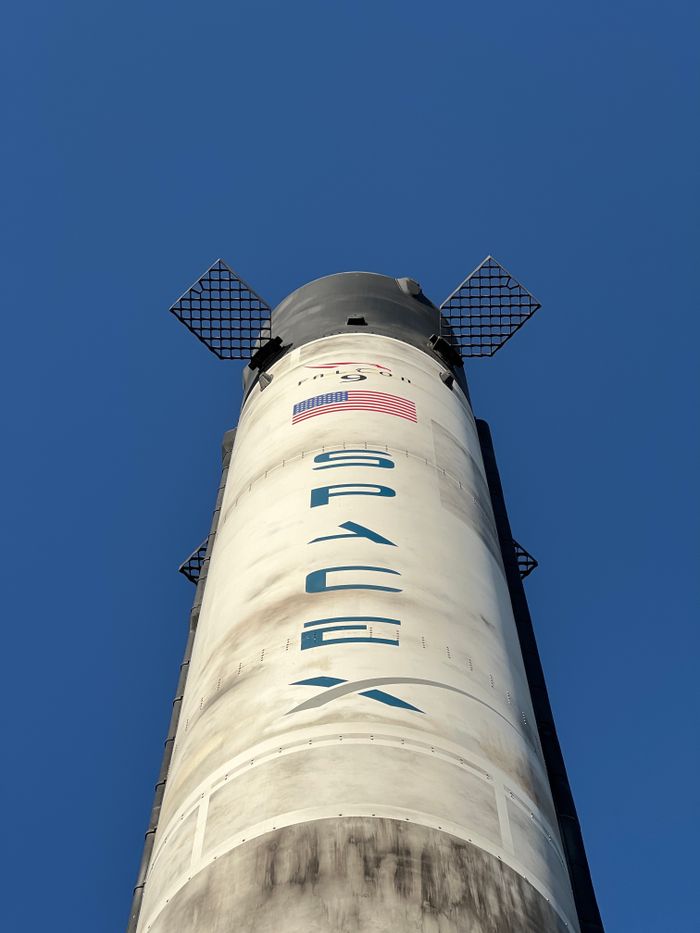
Starlink has somewhere between 9,600 and 10,400 active satellites, depending on which tracker and which date, roughly 65% of everything operational in orbit. Subscriber counts run from 10 million in February 2026 to 12 million across 164 countries by June. That latter figure comes from the company’s own S-1 filing. The FCC authorised another 7,500 satellites in January, and filings exist for close to 30,000 in total.
The newer part is direct to cell. More than 650 satellites now connect to ordinary smartphones, with no dish and no special hardware required. Coverage spans 22 countries, covering a claimed 400 million people. In December 2025, Airtel Africa agreed to deploy it across 14 African markets, reaching a customer base of 174 million.
Separately, several million connected vehicles report telemetry to a company under the same ultimate ownership.
What Starlink Surveillance Data Actually Exists
The value in this data was never going to be content. Traffic is encrypted and mostly dull. Instead, the value sits in the layer underneath, which is generated automatically and cannot be turned off without breaking the product.
Specifically, a terminal has a location, an activation time, and a deactivation time. It can also move, and when it does, the network follows it, because otherwise the beam misses. Aggregate those, and you have demand density. That’s a proxy for where people and activity are, in exactly the parts of the world that produce the least conventional reporting.
Nothing in that paragraph is an allegation. In fact, it is simply a description of what the system necessarily computes in order to work.
Seven Starlink Surveillance Scenarios Worth Naming
These are possibilities, not findings. Each is technically available given the architecture. None is evidenced here as having occurred. They are worth listing because the time to think about them is before the dependency is universal, not after.
Scenarios One Through Four
- Activity mapping. Terminal activations and demand density as an indicator of population movement, reconstruction, displacement, or military build-up. This requires no capability beyond what running the network already produces.
- Individual terminal tracking. A terminal is a persistent identifier bound to a physical object. Moving one from a city to a border is visible to the operator by construction. That would not be true for a fixed-line connection.
- Availability as leverage. Service shaped by geography rather than by customer. In fact, this one is not speculative in the way the others are, and it is discussed below.
- A parallel location register via direct to cell. A handset registering with a satellite is a handset registering with a network. Networks produce location data as a by-product of routing. Extended across African markets at the announced scale, this becomes a set of mobile location records generated outside the reach of any single national telecoms regulator.
Scenarios Five Through Seven
- A vehicle mobility layer. Where cars are, when they move, how far, how often, where they charge. This is a different population from the terminal base, sampled at higher frequency, held by the same owner.
- Access by legal process rather than by choice. Data that exists can be compelled, in whichever jurisdiction can reach it, whether or not the holder wants to provide it. Police in California have already towed vehicles from crime scenes, obtained warrants, and pulled recordings from the drive in the glovebox. The owners were usually unconnected to the incidents.
- Correlation under common ownership. This is the one with no real precedent. Orbital connectivity, cellular registration, vehicle movement, and a social platform all sit under a single controlling interest. In principle, that means they could be joined without an inter-company agreement, a data sale, or any external legal process. Not because anyone built it that way, but because the ordinary barrier between datasets is corporate separation, and here there is none.
Where the Vehicle Data Side Is Weaker Than It Sounds
The vehicle fleet is often described as a rolling camera network feeding a central system. On the published evidence, though, it is not that, and the accurate version is narrower.
Tesla states that Sentry Mode and Dashcam recordings are processed and stored in the vehicle or on external media, never on its servers. The Dutch data protection authority investigated Sentry Mode. Tesla changed the defaults in response, so recording now requires the vehicle to be touched and the owner to enable it, and the regulator closed the case without a fine.
Three Qualifications That Survive
Video is reachable by warrant, however, even if it never leaves the car, which is exactly what the towing cases demonstrate. Telemetry is a separate category from video, too. Location, charging, and driving data do go to the company under stated conditions, and cabin camera footage is shareable if the owner enables data sharing. And the protections are policy commitments and setting defaults rather than architectural impossibilities, which means they can change with a release note.
So the fleet is not the eye, then. Instead, it’s a second, independent, high-frequency behavioural dataset about a different population, under the same ownership as the first.
The One Starlink Surveillance Scenario Already Documented
Selective availability is not hypothetical. SpaceX geofences the service, restricting it outside Ukraine’s borders and in Russian-occupied territory. The Pentagon’s 2023 terminal contract, separately, was written specifically to give the Pentagon control over where the service worked inside the country.
The Crimea episode is worth telling accurately, because the widely circulated version is wrong. In 2022, Musk declined a Ukrainian request to extend coverage to Crimea during an operation against Russian ships, citing escalation risk and US sanctions exposure. He did not switch off existing coverage, since it had never been enabled there in the first place. CNN and The Washington Post both initially reported that he had, then issued corrections once the actual sequence of events became clear. Three senators on the Armed Services Committee wrote to the Defence Secretary about it anyway, which indicates how the incident was received institutionally.
Overall, the structural fact is what matters here: a decision by a private individual shaped the communications available during a military operation.
The Response That Tells You the Most
The United States government did not regulate its way around this. Instead, it bought a different system.
Starshield is the government variant: government-owned, more heavily encrypted, restricted to authorised agencies, backed by a reported $1.8 billion National Reconnaissance Office contract and Space Force awards. Reporting on the first Starshield award noted unusual terms and conditions. Industry observers read this as language preventing unilateral withdrawal of service, regardless of how the military chose to use it. Ukraine’s 3,000 terminals were subsequently moved onto it.
The customer with more leverage than anyone else looked at the commercial arrangement. It decided that ownership and control were unacceptable risks, and paid to build a parallel version it controls instead. Everybody else remains on the commercial product.
Why the Ownership Question Is Not a Normal Ownership Question
Infrastructure risk models generally assume corporate behaviour is legible. Companies are slow, interest-maximising, accountable to boards and shareholders, and constrained by regulators. You can forecast them.
The documented record here is less legible than that. At least $250 million went into the 2024 US presidential campaign, followed by 130 days leading a federal cost-cutting effort as a special government employee. Then came a public rupture with the administration, including a threat to found a third party. After that came a return to funding Republican congressional campaigns instead: $20 million to party groups by the end of 2025, and $10 million into a single Senate race the following month. Alongside all of that, there have been repeated interventions in European domestic politics through a social platform under the same ownership.
The concern is not the direction of any of it. Rather, it’s the amplitude. Specifically, positions that invert twice in eighteen months are hard to build a dependency model around, and dependency is exactly what is being built.
What Would Make Starlink Surveillance Risk More or Less Worrying
The honest counterweights deserve stating. Gwynne Shotwell runs SpaceX operationally. The Crimea decision had a defensible sanctions rationale. Vehicle footage genuinely is stored locally. And no evidence has emerged in public that terminal metadata has been used as an intelligence product. Nothing above asserts that it has.
Several developments would raise the temperature. Any documented instance of terminal metadata being provided outside routine legal process would count. So would any change to the vehicle data defaults that moves recordings off-device, any move to join datasets across the group, or a direct-to-cell deployment reaching national scale in a country with no domestic regulatory hook into it.
Other developments would lower it instead. Enforceable transparency on what metadata is retained, and for how long, is one. Independent audit of that retention is another. So are contractual guarantees against selective availability, offered to ordinary customers rather than only to the one buyer powerful enough to demand them.
Why the Starlink Surveillance Asymmetry Is the Point
Open sources are symmetric. Flight trackers, ship transponders, commercial imagery: if you can see it, so can everyone else, including the people being observed and the journalists who would report on it.
This is the opposite of that. The position register, the activation logs, the movement data, and the vehicle telemetry are visible to one party, and to whoever that party chooses. There is no external check and no independent measurement. Nor is there any way for anyone outside to confirm or refute a claim about how the data is used.
Which is why the wariness is warranted even in the absence of any wrongdoing. The problem is not evidence of misuse. Instead, the architecture makes misuse unobservable. The control has already been exercised once in a live conflict, and the only party that successfully insisted on guarantees was the one that could afford to build its own.
[INTERNAL LINK: Talk to our team about data governance and third-party infrastructure risk assessment →]
Frequently Asked Questions
The Basics
Does Starlink track the location of its users? Yes, necessarily. To aim a beam at a moving satellite dish and hand the connection off between satellites, the network has to know each terminal’s location continuously. This isn’t an added feature; it’s a requirement of how the service physically works.
Has Starlink ever restricted coverage for political or military reasons? Yes. SpaceX geofences the service, restricting it outside Ukraine’s recognised borders and in Russian-occupied territory. In 2022, Musk declined a Ukrainian request to extend coverage to Crimea during a military operation, citing sanctions risk and escalation concerns. He did not disable existing coverage, since it had never been activated in that area.
Is Tesla vehicle footage stored on company servers? No. Tesla states that Sentry Mode and Dashcam recordings are processed and stored in the vehicle or on removable media, not on its servers. Video is still reachable by police through a warrant, though, as demonstrated by several California cases where vehicles were towed specifically to retrieve onboard footage.
The Bigger Picture
What is Starshield, and why does it matter for Starlink surveillance concerns? Starshield is a separate, government-owned satellite network built by SpaceX, more heavily encrypted and restricted to authorised agencies. The US government reportedly negotiated terms preventing unilateral withdrawal of service. Ukraine’s terminals were moved onto it, suggesting the government itself treated the commercial Starlink product’s ownership structure as a risk worth engineering around.
Why does common ownership across Starlink, Tesla, and a social platform matter? Because it removes the ordinary barrier between datasets: corporate separation. Orbital connectivity, vehicle telemetry, and social media activity could in principle be correlated under one controlling interest without any data sale, agreement, or legal process between separate companies. No evidence shows this has happened. Even so, the architecture makes it possible in a way it wouldn’t be across unrelated companies.
References
Constellation Size, Subscribers, and Regulatory Filings
SpaceX’s S-1 filing and independent satellite tracking, including Jonathan McDowell’s satellite database, for constellation size and subscriber figures. Sources disagree on both satellite and subscriber counts, so ranges are given for that reason.
FCC order of January 2026 authorising 7,500 additional Gen2 satellites.
Direct to Cell and Africa Expansion
SpaceX Direct to Cell material and third-party rollout tracking. The Airtel Africa agreement across 14 markets was announced in December 2025.
Geofencing, Crimea, and Starshield
“Starlink satellite services in Ukraine,” Wikipedia. Snopes’ detailed reconstruction of the Crimea episode and the subsequent CNN and Washington Post corrections. SpaceNews reporting on Starshield contract conditions. Breaking Defense on National Reconnaissance Office contracting. Reporting on the Senate Armed Services Committee letter to the Department of Defense.
Vehicle Data Handling
Tesla’s published privacy documentation. Mozilla Foundation’s Privacy Not Included assessment. Dutch Data Protection Authority findings on Sentry Mode. Reporting on vehicles towed and warrants obtained for Sentry Mode recordings in California.
Political Activity and Spending
Reporting from Axios, The Hill, and Fox Business on 2025 and 2026 election-cycle donations. Federal Election Commission filings on America PAC and related super PAC spending.
Third-party disclosure: Figures on constellation size, coverage, and service performance come from company statements and are not independently verified beyond the specific filings and reporting cited above. The scenarios listed in this piece are possibilities inferred from system architecture. None is presented as having occurred, and no source cited here supports a claim that any of them has.
Read More Here